
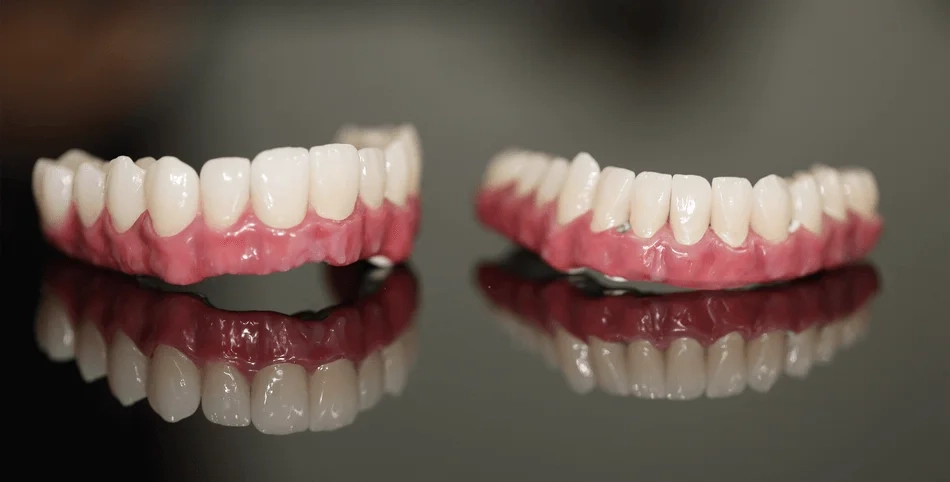

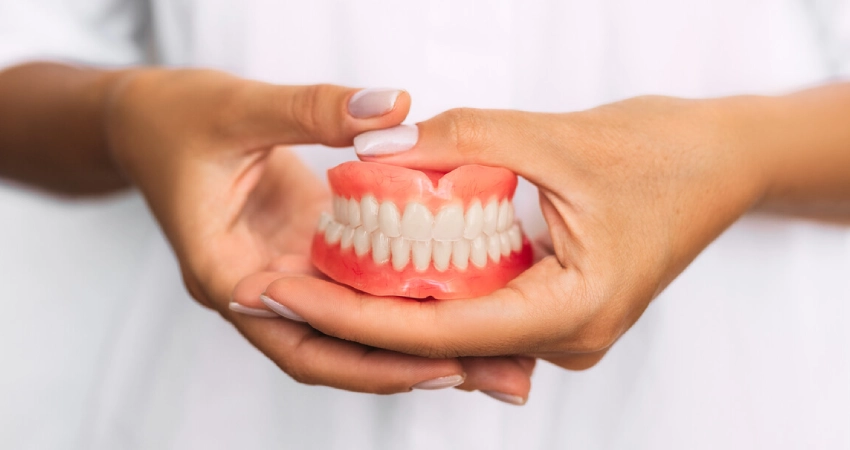
Dentures are removable dental prostheses custom-made to replace all or some missing teeth. They help restore chewing function, improve speech, enhance the appearance of your smile, and support the facial muscles. Dentures are usually made from medically safe materials such as acrylic resin or a combination of metal and acrylic, and they are designed to fit the gums and jaw precisely to reduce common denture problems like looseness, friction, and sore spots.
A patient may need dentures when they lose a large number of teeth, or all of them, due to advanced tooth decay, periodontal (gum) disease, trauma or accidents, or simply age-related wear when the teeth become too weak to restore. Dentures are also recommended when gaps between teeth interfere with chewing, cause speech difficulties, or lead to changes in facial appearance and reduced self-confidence. In these cases, complete or partial dentures help restore normal oral function and prevent additional problems such as shifting of the remaining teeth and temporomandibular joint (TMJ) disorders.
Types of Dentures and When Each Type Is Used
There are several types of dentures to match each patient’s needs depending on their oral condition and the denture problems they experience. Choosing the right type is essential to avoid pain, difficulty chewing, and speech issues.
In general, dentures are divided into:
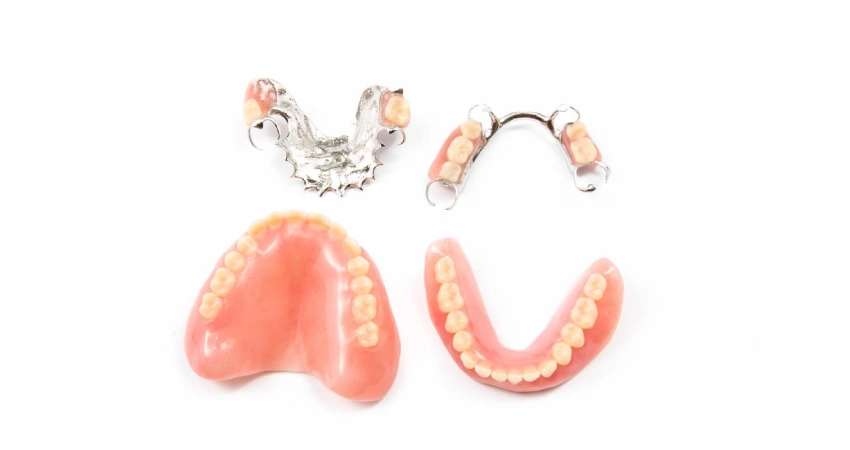
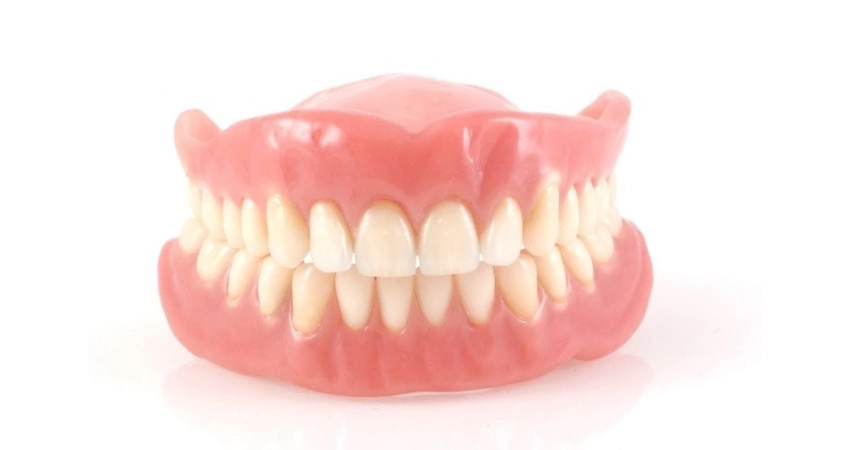
– **Complete (full) dentures**: Used when all teeth in the upper or lower jaw (or both) are missing. They restore facial appearance, support the cheeks and lips, and improve chewing and speech.
– **Partial dentures**: Used when some natural teeth remain. They are usually anchored to adjacent natural teeth to fill gaps and prevent the remaining teeth from drifting or tilting.
There are also **removable dentures**, which can be taken out and cleaned easily. They are the most common and typically the most affordable option, but if not properly adjusted, they may cause issues such as looseness or rubbing against the gums.
By contrast, **fixed implant‑supported dentures** are a more advanced and stable solution. They are attached to titanium implants placed in the jawbone, providing a feel that is much closer to natural teeth and reducing common denture problems like recurrent inflammation, looseness, and poor chewing efficiency.
Your dentist will determine the most suitable type of denture based on the condition of your jawbone and gums, your lifestyle, and your budget, to minimize future complications and ensure long‑term comfort and safe use.
Complete Dentures
Complete dentures are full-arch prosthetic sets used when the patient has lost all natural teeth in the upper or lower jaw, or both. They are among the most common treatments for total tooth loss. These dentures are designed to restore the ability to chew, speak clearly, and improve overall facial appearance.
However, complete dentures may be associated with several issues, such as instability, difficulty adapting in the first few weeks, and gum irritation. One of the main problems with complete dentures is poor retention during eating or speaking, especially when the jawbone is weak or resorbed, which can cause the denture to move and rub against the gums. This friction often leads to gum inflammation, painful ulcers, and a persistent feeling of discomfort.
For this reason, people who wear complete dentures need regular dental visits for adjustments, to ensure proper fit, and to learn the correct way to clean and care for the dentures to reduce bad odors and inflammatory problems.
Partial Dentures
Partial dentures are used when only some of the natural teeth are missing and there are still healthy teeth that can support the prosthesis. A partial denture usually consists of a metal or acrylic base holding the artificial teeth, secured in place by clasps or special attachments that grip the neighboring natural teeth.
This type of denture helps close gaps, improve chewing efficiency, and prevent natural teeth from shifting or tilting into empty spaces. However, partial dentures can cause problems such as food buildup around metal clasps, an increased risk of decay in the supporting teeth, and gum inflammation around attachment areas if oral hygiene is poor.
Patients may initially feel heaviness or a “foreign body” sensation in the mouth, which takes some time to get used to. Detailed instructions from the dentist on how to insert and remove the partial denture and how to clean it daily are essential.
Removable vs. Fixed Dentures
Overall, dentures can be either **removable** or **fixed**, and each type has its own indications and possible complications.
**Removable dentures**, whether complete or partial, can be taken out and put back in by the patient. They are widely used in cases of multiple tooth loss or reduced jawbone volume. Common problems with removable dentures include lack of stability, initial speech difficulties, friction with the gums, and the need for meticulous daily care to prevent bad breath and infections.
**Fixed prostheses** include bridges, crowns, and restorations supported by natural teeth or dental implants. They are permanently cemented in the mouth and can only be removed by a dentist. Fixed options usually offer greater stability and a feel closer to natural teeth, but they can cause issues such as gum inflammation around the margins, or difficulty cleaning under bridges, which increases the risk of plaque buildup and bacterial accumulation if oral hygiene is not optimal.
The choice between removable and fixed dentures depends on the condition of the jawbone and gums, the number of missing teeth, and the patient’s overall health. It also involves a discussion of the pros, cons, and common problems of each type to arrive at the best long‑term treatment option.
Common Mistakes in Using Dentures
Many patients experience denture problems because of simple mistakes in daily use and care. One frequent error is wearing new dentures for very long periods without giving the tissues a rest, which can lead to gum inflammation, mouth ulcers, and difficulty chewing and speaking.
Another widespread mistake is neglecting proper denture cleaning, or using regular toothpaste or abrasive products that scratch the denture surface, encouraging bacterial buildup and bad odors. Some patients also sleep with their dentures in without consulting a dentist, or skip follow‑up visits when they feel that the denture has become loose or moves inside the mouth. This aggravates denture problems and negatively affects its fit and function over time.
Trying to adjust or repair the denture at home using non‑medical glues or materials can deform the prosthesis and irritate the oral tissues. To avoid these common denture‑use mistakes, patients should closely follow their dentist’s instructions, maintain good denture and oral hygiene, and keep up with regular checkups to ensure stable, comfortable dentures and better chewing and speech.
Not Cleaning the Denture Daily
Not cleaning dentures every day is one of the most common mistakes and a major cause of annoying oral and gum problems. Food debris and bacteria accumulating on the denture surface cause bad breath, gum inflammation, and formation of calculus that becomes harder to remove over time.
Neglecting daily cleaning also increases the risk of fungal infections such as oral candidiasis (thrush), which can lead to redness, burning sensations on the palate and gums, and generalized discomfort.
Dentists recommend cleaning removable dentures at least twice a day with a soft brush and a denture‑specific cleaner, along with thorough cleaning of the mouth, gums, and tongue to maintain oral health and reduce long‑term denture problems. Regular cleaning extends the life of the denture, preserves its natural appearance, and helps maintain proper chewing and speech.
Sleeping with Dentures In
Sleeping with dentures in place is a common mistake that many patients overlook, but it can seriously affect oral and gum health. Leaving the denture in the mouth overnight prevents the soft tissues from resting and reduces normal saliva flow, creating an ideal environment for bacterial and fungal growth.
This habit increases the risk of gum inflammation, mouth ulcers, and faster jawbone resorption, as well as worsening denture problems such as instability and discomfort.
Most dentists advise removing dentures before bedtime, cleaning them thoroughly, and soaking them overnight in a special denture solution or clean water, while gently massaging the gums and cleaning the mouth. This simple routine helps prevent many denture‑related issues and supports long‑term oral health.
Wearing an Ill‑Fitting Denture
Using a denture that does not fit properly is one of the most serious common mistakes, because it not only causes discomfort, but can also lead to ongoing gum and jaw problems. A denture that is too loose or too tight constantly rubs against the gums and palate, causing painful sores, difficulty chewing, and speech disturbances.
An ill‑fitting denture moves around in the mouth, creating a constant feeling of instability and anxiety about the denture slipping while speaking or laughing. Over time, continuing to wear a poorly fitting denture can accelerate changes in the jawbone and gums, making denture problems even worse.
Patients should see their dentist promptly if they notice any discomfort, pain, or change in denture stability, so the fit can be adjusted or a new denture can be fabricated to match the current shape of the jaw. A properly fitted denture improves chewing ability, reduces denture‑related problems, and provides a natural, aesthetic smile.
Skipping Dental Checkups
Failing to see the dentist regularly after getting dentures is another common mistake that allows problems to build up unnoticed. Many people think that once the denture is made, the treatment is finished, whereas in reality both removable and fixed dentures require ongoing follow‑up to adjust the fit and assess the health of the gums and jawbone.
Over time, the shape of the gums and supporting bone changes, which may cause the denture to become loose or apply pressure to specific areas in the mouth. Visiting the dentist every 6–12 months helps detect problems early, such as sore spots, inflammation, material wear, or the need to reline the denture so it fits properly again.
The dentist will also provide updated instructions on cleaning the denture and maintaining oral health, which reduces the risk of decay in remaining teeth (if any), gum disease, and fungal infections. Regular follow‑up is an essential part of successful denture treatment, not an optional extra.
Using the Wrong Cleaning Products
Using inappropriate cleaning products for dentures is another common mistake that can damage the prosthesis and irritate oral tissues. Some people use regular abrasive toothpaste, strong household cleaning powders, or very hot water, thinking these will clean better. In fact, such products can scratch the denture surface, change its color, and weaken the material over time, increasing bacterial buildup and leading to problems like bad odor and oral infections.
Using concentrated bleach or household cleaners can also cause severe irritation of the gums and tongue if the denture is not rinsed thoroughly or if chemical residues remain on it.
Dentists recommend using specially formulated denture‑cleaning solutions available at pharmacies, along with a soft brush and lukewarm water, and avoiding any harsh or abrasive materials. Choosing the right cleaning products preserves denture integrity, improves oral health, and reduces denture‑related problems over the long term.
How Do These Mistakes Affect the Gums and Oral Health?
Misusing dentures—such as wearing them for extended periods without removal, neglecting daily cleaning, or leaving them poorly fitted—can cause significant gum inflammation and constant irritation of the surrounding tissues.
Pressure from an ill‑fitting denture on the gums leads to painful ulcers, redness, and swelling, and over time may contribute to gum recession and weakening of the supporting bone. This negatively affects denture stability and overall oral health.
Food debris and bacteria trapped beneath the denture due to poor care and hygiene worsen bad breath and increase the risk of bacterial and fungal infections, such as denture‑related stomatitis. If these handling errors continue without a dental checkup to adjust or replace the denture when needed, gum health deteriorates, chewing efficiency decreases, and the patient’s comfort and confidence in wearing the denture decline—directly impacting quality of life and long‑term oral health.
The Right Way to Care for Your Dentures
Proper denture care starts with daily cleaning using a soft brush specifically designed for dentures and a denture cleaner, not regular toothpaste, which can scratch the surface. After each meal, dentures should be removed and rinsed thoroughly with water to eliminate food particles and reduce bacterial buildup and odor.
At night, dentures should be soaked in a denture‑cleaning solution or in lukewarm water (never hot water, which can warp the material) to maintain their shape and cleanliness.
It is also important to clean the gums, tongue, and palate daily with a soft brush before reinserting the denture to promote oral health and lower the risk of infection. Avoid using bleach, harsh cleaners, or strong chemicals, as they can weaken the denture material and alter its color.
Regular dental visits are essential to check the denture, confirm a proper fit, and adjust the size when necessary, since ignoring these steps can lead to gum injuries, mouth ulcers, and difficulty chewing or speaking. Following these simple guidelines significantly reduces common issues such as infections, bad odors, and denture damage, and helps maintain a healthy smile and comfortable oral function.
How Long Do Dentures Usually Last?
On average, complete or partial dentures last between 5 and 10 years, but this varies from person to person depending on the quality of fabrication, how well the denture is cared for, and the condition of the gums and supporting jawbone.
Over time, the denture material wears down and the shape of the gums and bone changes after tooth extraction, which can cause denture looseness, instability, and problems such as difficulty chewing, gum irritation, and soreness of the palate.
Dentists generally recommend having your dentures checked at least once a year to make sure they still fit properly and to determine if they need relining, adjustment, or complete replacement when they become too loose, cause pain, or no longer function well for chewing and speaking. Daily care—regular cleaning, soaking in a proper solution at night, and following professional instructions—helps extend the life of the denture and reduces the need for early replacement.
The Importance of Regular Follow‑Up with Your Dentist
Regular follow‑up with your dentist is crucial for maintaining oral health and ensuring long‑term success with dentures, especially for patients who frequently experience denture problems. Routine visits help detect gum inflammation or sore spots caused by denture friction at an early stage, before they develop into more serious issues.
They also allow the dentist to adjust the denture when changes occur in the jawbone or gums—a normal process over time—thereby reducing instability, discomfort, and difficulty chewing or speaking. During these visits, the denture can be professionally cleaned and polished, limiting bacterial buildup and bad odors and preserving its natural appearance.
Furthermore, regular checkups make it possible to detect any wear, cracks, or fractures in the denture early and to recommend appropriate solutions, such as relining or replacement when needed, to ensure better comfort and quality of life for the patient.
Denture Fabrication and Care at Batal Dental Complex
At Batal Dental Complex, dentures are fabricated according to strict clinical standards to ensure stability, comfort, and reduced incidence of common denture problems such as sores, inflammation, and difficulty chewing or speaking. We perform a comprehensive examination of the mouth and gums, take precise measurements, and design dentures that match the patient’s jaw shape and bite. This improves appearance, restores chewing efficiency, and reduces pressure on the gums.
After delivering the dentures, our dentists carefully explain proper home care, including daily cleaning with a special brush and suitable cleanser, soaking in a recommended solution, and thorough cleaning of the gums and tongue to maintain overall oral health.
We also encourage regular follow‑up visits to Batal Dental Complex to check and adjust the denture when necessary, and to treat any pain or inflammation at an early stage before it develops into a more serious problem. This approach helps keep the denture stable and comfortable, extends its lifespan, and enhances the patient’s quality of life.
Patient Guide – Frequently Asked Questions About Dentures: Common Mistakes, Proper Care, and When to Replace Them
Can I Sleep with My Dentures In?
It’s better to remove your dentures while sleeping to prevent gum inflammation and support overall oral health.
How Long Do Dentures Last?
They typically last between 5 and 8 years, depending on how well you care for them and how much your jaw shape changes over time.
Do Dentures Cause Pain?
They can be painful if they don’t fit properly or if they need adjustment.
How Do I Clean My Dentures Properly?
Clean them daily with a denture brush and a denture‑specific cleaner, not regular toothpaste.
When Do I Need to Replace My Dentures?
When you feel persistent discomfort, notice changes in fit, or develop recurring sores and inflammation.
Can the Gums Change After Getting Dentures?
Yes. Gum and bone shape change over time, which is why regular follow‑up appointments are necessary.
Do Dentures Affect Speech?

You may need some time to adapt, but speech usually returns to normal once you get used to the dentures.