
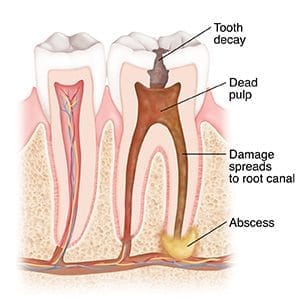

Tooth decay is one of the most common oral health problems. If left untreated, it can progress, damage the tooth structure, and eventually reach the dental nerve (pulp), causing pain and infection. That’s why it’s important to recognize the signs and symptoms of advanced decay before it leads to serious complications.Below are five key symptoms that may indicate tooth decay has reached the nerve.
1. Tooth or Gum Pain
Pay close attention to any pain in your teeth or gums. Pain is often the first and most important warning sign that decay may have reached the nerve.– The pain can be sharp or throbbing. – It may be constant or come and go. – It often worsens when eating or drinking something hot or cold, or when chewing.If you experience this type of pain, it could mean that the decay has progressed deep into the tooth and is affecting the nerve.
2. Change in Tooth Color
A noticeable change in the color of a tooth can also be a sign that decay has reached the nerve.– The affected tooth may become darker than the surrounding teeth. – The color can shift to brown, gray, or even black.This discoloration often indicates significant internal damage to the tooth structure and the nerve (pulp).
3. Swelling in the Gums or Face
When decay reaches the nerve, it can lead to infection and inflammation, which may cause:– Swelling of the gums around the affected tooth – Swelling in the cheek or part of the face on the same side as the painful toothThis swelling is often accompanied by:– Severe pain – Difficulty chewing – Trouble speaking clearly due to discomfortThese signs may indicate an abscess or advanced infection that needs urgent dental treatment.
4. Tooth Sensitivity
Increased tooth sensitivity can also signal that decay has reached the nerve.You may notice:– Sensitivity when eating or drinking hot, cold, sweet, or acidic foods and beverages – Discomfort or a sharp twinge that lingers after exposure to these triggersPersistent or worsening sensitivity, especially in a specific tooth, can be a sign that the nerve is irritated or inflamed due to deep decay.
5. Tooth Fracture or Breakage
When decay weakens the tooth structure and reaches the nerve, the tooth becomes more fragile and prone to breaking.– Parts of the tooth may chip or break off while chewing. – The tooth may feel rough or sharp at the edges. – Pain may increase after the tooth fractures because the nerve becomes more exposed.A broken or crumbled tooth often indicates advanced decay that requires prompt dental care, such as a root canal treatment or, in severe cases, extraction.
How to Protect Your Teeth and When to See a Dentist

Always pay attention to any changes in your teeth or gums—pain, swelling, discoloration, sensitivity, or fractures should never be ignored. If you suspect that decay has reached the nerve, seek dental care as soon as possible to avoid complications like abscesses or tooth loss.You can greatly reduce the risk of severe decay by:– Brushing your teeth regularly with fluoride toothpaste – Flossing daily to clean between the teeth – Eating a balanced, healthy diet – Limiting sugary foods and carbonated drinks – Scheduling regular dental check-ups and professional cleaningsWhen treatment is needed, rely on qualified dental professionals who can provide appropriate care—such as fillings, root canal treatment, or other procedures—to treat the decay and help prevent further oral health problems.