

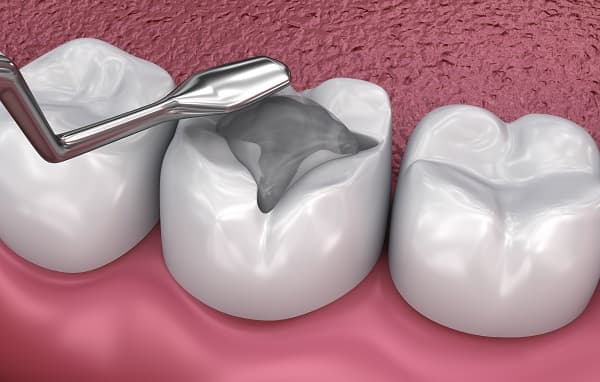

Dental fillings are one of the most common forms of restorative dentistry used to treat cavities or damage caused by tooth decay. The restorative materials used can range from more affordable options to higher-end, more durable ones.Fillings can be made from different materials such as amalgam, porcelain, gold, and composite (tooth-colored) fillings. Each type has its own unique advantages depending on the case and the specific dental treatment required. In this article, we’ll go through these types one by one.If you are in Saudi Arabia, we recommend visiting Batal Dental Center, where you’ll find a wide range of available treatments and excellent services.Read also: Treatment of Dental Caries
Types of Cavity Fillings
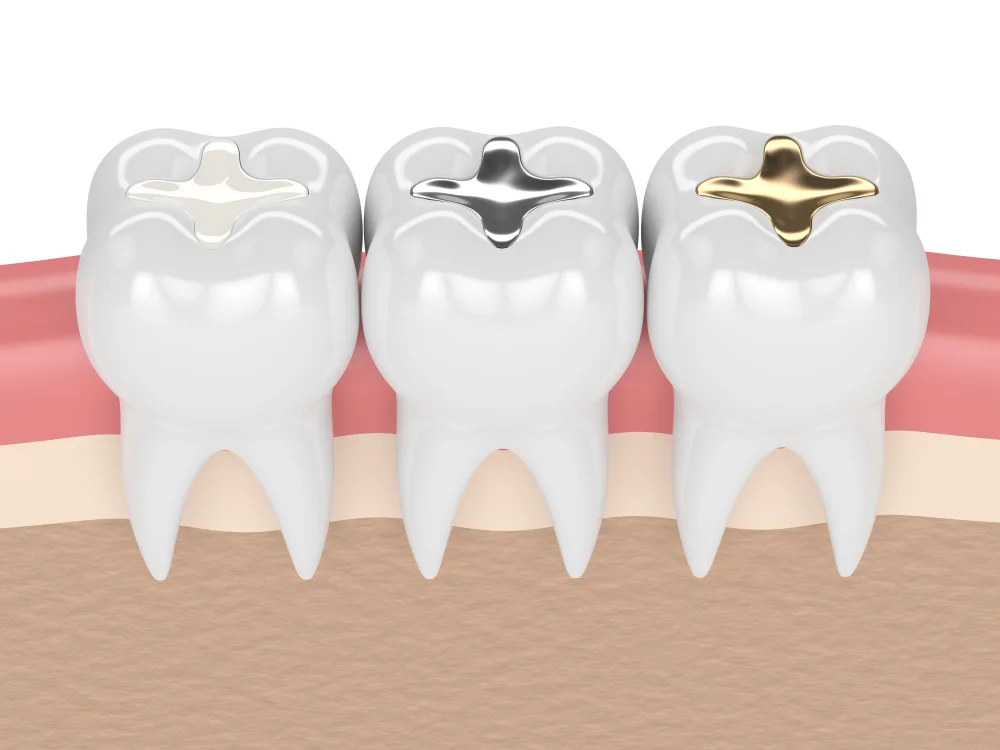
The main types of cavity fillings include the following:
Amalgam Fillings
Amalgam fillings are a combination of silver, mercury, and other metals. They are very strong and ideal for filling cavities in molars, where most chewing takes place.Because these fillings are metallic, they are not tooth-colored and are not easily hidden. They can be noticeable when you smile or laugh. However, they are among the least expensive options and can be highly beneficial in many cases.
Composite (Tooth-Colored) Fillings
These fillings are made from a mixture that typically includes glass or quartz filler. They can be shade-matched to the natural color of the teeth. Composite fillings are quite durable and are best suited for small to medium-sized restorations.
Metal Fillings
Metal fillings (such as gold or certain metal alloys) are generally more durable than composite fillings and can last up to 15 years or longer, depending on oral hygiene and biting forces.
Ceramic (Porcelain) Fillings
Ceramic fillings are usually made of porcelain and are very popular because they can be fabricated to closely match the natural color of the teeth. They also tend to resist staining over time better than composite fillings.However, they are significantly more expensive and can cost approximately the same as gold restorations.Read also: Advantages and Disadvantages of Root Canal Fillings
Advantages and Disadvantages of Dental Fillings
Advantages of Dental Fillings
The main benefits of dental fillings include:– Restoring the normal function of the tooth (chewing and biting) – Preventing further progression of tooth decay – Maintaining the tooth structure and avoiding extraction when possible – Improving the appearance of teeth, especially with tooth-colored fillings – Supporting overall oral health by sealing off areas where bacteria can accumulate
Disadvantages of Dental Fillings
Some potential drawbacks include:– The possibility of sensitivity to hot or cold after the procedure, especially initially – The need to remove a portion of the tooth structure to place the filling – Certain materials (like amalgam) are more visible and less aesthetic – Fillings can wear down, chip, or fracture over time and may need to be replaced – Larger or multiple fillings can weaken the remaining tooth structure and sometimes lead to the need for a crown later onDental fillings are an essential part of treating tooth decay and maintaining oral health. If you suspect you have a cavity or think you might need a filling, it’s important to schedule an appointment with the dentists at Batal Specialized Center.Our team provides the highest quality of care and ensures that your dental restoration is as comfortable and long-lasting as possible.Don’t wait—contact us today and take the first step toward a healthy, beautiful smile!Read also: Everything You Need to Know About Dental Grafts and Fillings
Cost of Dental Fillings
Amalgam fillings are generally more resistant to wear than porcelain or composite materials, but they may not blend with the natural color of the patient’s teeth.On the other hand, porcelain or gold restorations can blend more harmoniously with the patient’s existing tooth color, but they may not always hold up as well over a very long period under heavy daily use, and they are typically more expensive.If the patient has dental insurance, it will likely cover part of the cost of dental fillings.The total cost of a filling depends largely on the type of material used. Composite (tooth-colored) fillings are typically more expensive than standard silver amalgam fillings because they require more costly materials and a more technique-sensitive, time-consuming procedure.Amalgam fillings remain one of the most affordable types of dental restorations available to patients. Although silver fillings are not as commonly used as they once were, they are still in use today.By comparison, dental crowns usually cost about 3–5 times more than fillings, as they require more extensive work, materials, and chair time from the dentist. In return, crowns offer a stronger, longer-lasting, more durable, and more esthetically pleasing restoration.Read also: Dentist at Batal Specialized Center | Extensive Experience and Advanced Skills