

Table of content
ToggleFront Tooth Replacement | How to Replace Missing Front Teeth
If you stopped someone on the street and asked about their worst “dental nightmare,” losing their front teeth would almost always top the list. From an aesthetic standpoint, what could be worse?
Losing one or both central incisors can happen for many reasons. Sometimes it’s due to obvious incidents, such as contact sports and high‑impact activities like hockey, football, or skating.
Tooth decay and gum disease (periodontal disease) are also major causes of tooth loss, accounting for most missing teeth. In addition, some people have genetic conditions that lead to congenital absence of front teeth.
Surprisingly, anxiety and stress can also indirectly contribute to losing front teeth. This became widely discussed after actress Demi Moore revealed she had lost her front teeth due to stress.
Knowing what can cause the loss of your front incisors can help with prevention, but it doesn’t offer much comfort to those already dealing with the cosmetic and functional impact of missing front teeth.
What are your options? As the title suggests, replacing front teeth with dental implants is generally considered the gold standard. Still, it’s important to understand all available alternatives so you can make an informed decision before seeing a specialist near you. Below are the main options for replacing missing front teeth and the key factors to consider before choosing a front-tooth replacement method.
Also read: Immediate Dental Implants | Everything You Need to Know
Partial Dentures for Front Tooth Replacement
After placing an immediate denture (a short‑term solution to “fill the gap” right away), a custom partial denture can be fabricated and fitted to replace your missing teeth. This option restores your appearance as well as basic chewing and speaking function. Some people choose this route because it is typically the least expensive option.
Over the years, even well‑made partial dentures will show wear and tear. They may become less comfortable, fit less securely, and work less efficiently during normal oral function. As a result, many patients find themselves spending more time and money on relines, adjustments, and repairs than they expected. You should learn more about partial dentures and front‑tooth replacement options before making your final decision.
Also read: What Is a Dental Prosthesis? A Detailed Overview
Dental Bridges
In front‑tooth replacement, dental bridges usually cost more than partial dentures, but they are still a budget‑friendly choice for many patients.
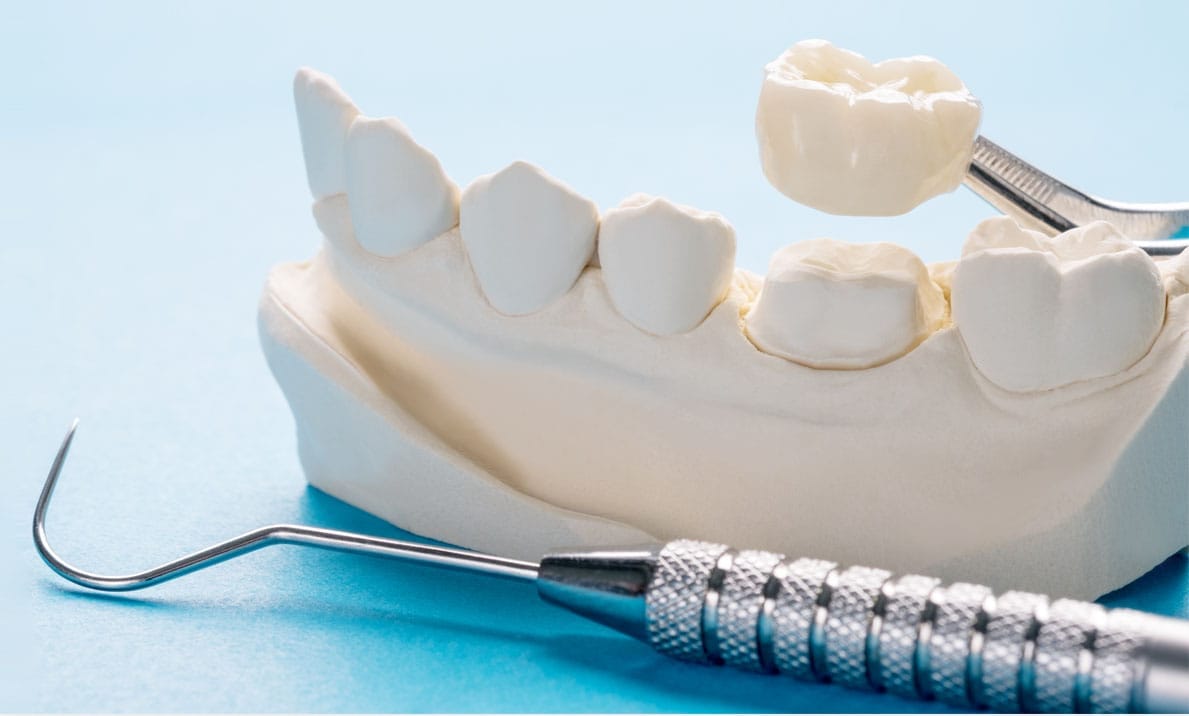
When a bridge is used to replace missing front teeth, the artificial tooth (or teeth) is held in place by crowns (also called abutments) cemented onto the canine teeth on either side of the missing incisors.
Bridges are often more stable and functional than removable partial dentures. However, like partials, they bring their own long‑term concerns. First, preparing the neighboring teeth for crowns can compromise their natural structure and integrity. Bridges also tend to require more maintenance over time than the natural teeth they replace. While generally more comfortable and secure than partial dentures, they may still not feel as natural as you would like.
Also read: Plaque Removal and Tartar (Calculus) Cleaning
Dental Implants for Front Tooth Replacement
All of the above leads to the clear conclusion that front‑tooth dental implants are usually the preferred solution. Their advantages are numerous and straightforward.
A major benefit is that they look more natural than other options. They also do not compromise the health of your canine teeth (the teeth on either side of your incisors). Implants feel and function like natural teeth and require the same daily oral care your family dentist already recommends: brushing, flossing, and regular checkups.
Most importantly, the long‑term cost of living with dental implants can actually be lower than other options. When implants are placed and restored properly, they typically do not need to be replaced or repaired as often as dentures and bridges.
Also read: Braces Colors | How They Work and How to Choose the Right Shades
Doing Nothing
Although this may not sound like much of an “option,” some people choose not to take any action after losing their front teeth and simply live without treatment instead of pursuing front‑tooth replacement.
While this is often a budget‑driven decision, it is, quite frankly, a very poor choice. Missing front teeth do not only affect your overall quality of life—socially and professionally—they can also make future implant treatment more complicated the longer you wait.
Over time, bone loss will occur in the area of the missing teeth. This is one of the main reasons dental implants can fail. Bone loss doesn’t just make the surgical procedure more difficult; it also reduces the bone’s ability to integrate with the implant, leaving it without the solid support it needs over the coming months and years.
The good news is that even if months or years have passed since your teeth were lost or extracted, a skilled prosthodontist can still help you restore your smile. This may involve bone grafting or using advanced surgical techniques and regenerative technologies. However, the sooner you act, the easier the process will be—for both the specialist and for you. In other words, you shouldn’t wait another day to start corrective treatment and move forward with front‑tooth replacement.
Also read: Orthodontic Toothbrushes | What You Need to Know
The Dental Clinic at Batal Specialty Complex is equipped with advanced tools and devices to help anyone suffering from dental pain find relief in the hands of highly skilled dentists. Book your appointment at the dental clinic of Batal Specialty Complex as soon as possible.
Also read: The Difference Between a Gum Abscess and a Tooth Abscess