

Table of content
ToggleWhat Are Dental Implants in Detail?
Dental implants are artificial tooth roots used to support restorations that replace missing teeth. They help stop or prevent jawbone loss. Implant treatment is classified as a form of prosthetic dentistry (artificial tooth replacement), but it is also considered a type of cosmetic dentistry.
People who have lost teeth may feel embarrassed to smile or speak. In addition, bite problems caused by tooth loss can negatively affect eating habits, which may lead to secondary health issues such as malnutrition.
By replacing the roots of missing teeth, dental implants give patients the strength and stability they need to eat the foods they love without difficulty chewing. They also help stimulate and preserve the jawbone, preventing bone loss and supporting natural facial contours.
Tooth Loss
Teeth are lost due to:
The original text does not list the causes here; if they exist in the source, they should be inserted as bullet points.
Consultation for Treatment
To determine whether implants are right for you, you will need a consultation with a dentist and/or an oral surgeon and/or a periodontist or prosthodontist. During this visit, the dentist will carefully examine your teeth and gums and assess your bone quantity and density.
This evaluation may include dental X‑rays and a CT scan (computed tomography) to ensure there is enough bone structure to place the implant(s) and to pinpoint the exact ideal positions.
Based on the condition of your oral tissues, your oral hygiene, personal habits, and your commitment to following post‑operative care instructions, your dentist will recommend the most appropriate treatment plan.
Some patients who have insufficient bone or gum tissue may need bone grafting, soft tissue grafting, and/or the use of small‑diameter implants (also called mini implants).
Depending on your specific case, your dentist will tell you how long the entire treatment process is likely to take, how many appointments will be needed, and what you can expect after each stage. During the consultation, options for local anesthesia (to numb the treatment area and surrounding tissues) and, when indicated, sedation dentistry will also be discussed.
An estimated cost for implant treatment will be provided at this visit. Costs can vary widely depending on the type of treatment you choose, among other factors.
Before Dental Implant Treatment
Any underlying oral health issues must be addressed before moving forward with implant surgery. Common problems such as tooth decay and gum disease can make implant treatment less effective.
If you are a smoker, your dentist will strongly advise you to quit, because smokers face a higher risk of implant failure than non‑smokers. Smoking can interfere with osseointegration, the process by which a dental implant fuses with the jawbone. Once your dentist determines that your mouth is healthy enough for treatment, implant placement can begin.
Dental Implant Surgery
Modern implant restorations are virtually indistinguishable from natural teeth. This natural appearance is supported by the structural and functional connection that forms between the implant and the living bone.
The procedure is usually performed in a single surgical session, but it requires a healing period for osseointegration. Osseointegration is the process through which the implant becomes firmly anchored in the jawbone.
Osseointegration typically takes from six weeks to six months to complete. After this healing period, your dentist can restore the implant by placing a crown, bridge, or a hybrid denture.
If osseointegration does not occur, the implant will fail. Implant surgery to replace missing teeth can be performed any time after the teenage years, once jawbone growth is complete. Certain medical conditions, such as uncontrolled diabetes, active cancer, or advanced periodontal disease, may require additional treatment before implant placement.
The detailed procedural steps in a dental implant treatment are as follows:
The original text indicates steps but does not list them; they should be added here if available.
Recovery, Follow‑Up, and Aftercare
Recovery after implant placement depends on several factors, including the number and type of procedures needed to complete your treatment. It is generally accepted that once the implant is placed, maintaining excellent oral hygiene habits is crucial to ensure proper integration with the bone.
Failure to brush and floss thoroughly can contribute to implant failure. Infection can develop if the implant and surrounding areas are not cleaned properly. Smoking is also associated with higher failure rates and should be avoided after implant surgery.
If temporary restorations are placed along with the implant, it is important to clean them just as you would your natural teeth to support optimal healing and integration. After the initial surgical procedure, discomfort is usually minimal.
You may experience some swelling of the gums and face, along with minor bleeding and bruising at the implant site. Your dentist may prescribe pain medication to control any pain or discomfort after the procedure. For about five to seven days after surgery, your diet should be limited to soft foods.
If sutures are present, your dentist may need to remove them; however, dissolvable stitches are commonly used and do not require removal. Healing from the implant placement surgery can take up to six months, while fabrication and seating of the final crown may take up to two months.
Types of Dental Implants
Dental implants are commonly categorized according to the surgical protocol used to place them: a two‑stage approach or a one‑stage approach, as follows:
The original text references the types but does not list them; if details exist, they should be inserted here.
Implant Sizes
Implants can also be classified by size (often referred to as the “platform”), which helps determine where in the mouth they can be placed. However, every case is unique, and spacing requirements and available bone may call for different implant sizes.
The Dental Clinic at Batal Specialized Complex is equipped with advanced tools and technology to help anyone suffering from dental pain get relief in the hands of highly skilled dentists. Schedule your appointment at the dental clinic at Batal Specialized Complex as soon as possible.
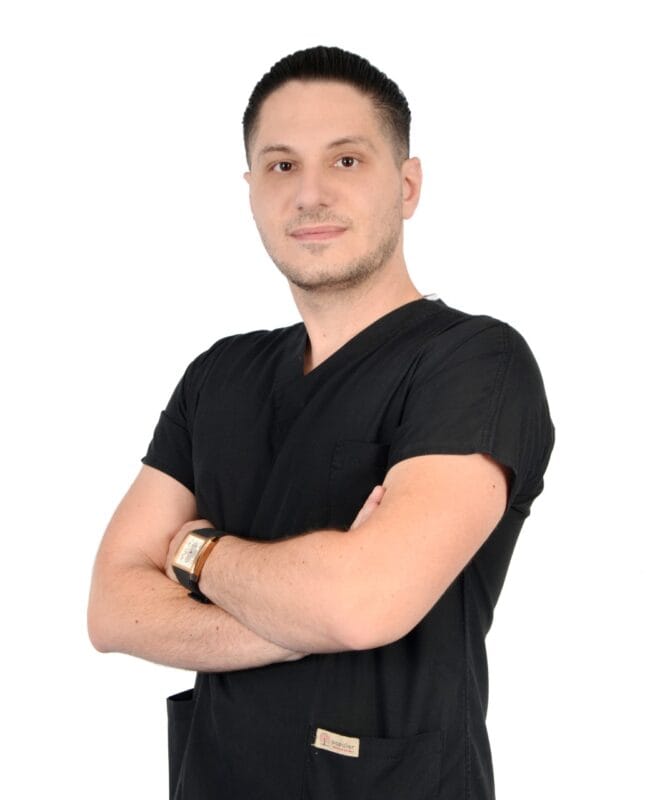
Dr. Fares Matouk
Bachelor’s degree in Dental Medicine and Surgery from Al‑Qalamoun University – Damascus.
Has completed multiple courses in cosmetic dentistry and smile design.
Eleven years of experience in restorative and cosmetic dentistry.
Areas of interest and expertise include:
– All types of fixed prosthodontic services (bridges, crowns, and bonded dental veneers such as veneers and Lumineers)
– Cosmetic dental services (esthetic fillings, tooth restoration, Hollywood smile)
– Comprehensive smile makeover planning
– Root canal treatment and tooth extraction.
د.فارس معتوق
بكالوريوس طب وجراحة الاسنان من جامعة القلمون – دمشق.
حاصل على دورات في مجال تجميل الاسنان وصناعه الابتسامة.
خبرة ١١ سنة في علاج وتجميل الاسنان.
مهتم ومبدع في الاختصاصات التالية:
خدمات التركيبات بأنواعها (جسور – تلبيس – العدسات السنية اللاصقة (فينير – لومينير)
خدمات تجميل الأسنان (حشوات تجميلية – ترميم الأسنان – ابتسامة هوليوود).
تأهيل كامل لتجميل الابتسامة ضمن خطة متكاملة- علاج جذور الاسنان، خلع الاسنان.