

Table of content
ToggleDental Veneers | Key Advantages and Disadvantages
Over the past few decades, dentistry has advanced significantly, largely thanks to major developments in dental materials and modern equipment—especially in the field of cosmetic dentistry.
With the availability of high‑quality materials, you’re likely looking to restore your smile with the best possible color and shape. That’s why we’ve gathered the most important information about the pros and cons of dental veneers before you begin treatment, so you can enjoy a confident, attractive smile.
What Are Dental Veneers?
A veneer is a thin porcelain shell that is bonded to the front surface of the tooth to protect it from damage or to improve its appearance. Veneers are an excellent option for people who want to enhance the aesthetics of their teeth and achieve a harmonious, attractive smile.
Veneers are used in many situations, such as when part of a tooth is lost after an accident, or when a patient has lost portions of their front teeth. In these cases, it has become relatively easy to restore the teeth to their previous shape and appearance.
Advantages and Disadvantages of Veneers
Veneers have many pros and cons. Here are the most important ones:
One of the main advantages of veneers is that they provide a cosmetic treatment solution in a relatively short time and with minimal discomfort.
On the other hand, one of the main drawbacks is that some patients may experience temporary tooth sensitivity, which usually improves gradually with proper care and regular follow‑up.
Can Veneers Be Adjusted?
Minor adjustments to veneers can be made after they are placed. The dentist will usually examine and fine‑tune them shortly after the bonding appointment if needed.
Veneer costs vary from one dentist to another, so it’s best to agree on the price before starting treatment. Your dentist should also inform you about the expected lifespan of the specific type of veneer being used, as veneers can chip or fracture just like natural teeth.
Can Veneers Be Removed from Teeth?
Veneers are considered a permanent treatment and cannot simply be removed and leave the tooth as it was. During the procedure, the dentist removes a very thin layer of enamel to create space for the veneer to bond properly. In some cases, the natural shape of the tooth may be modified significantly before placing the veneer.
Tooth Shaving (Preparation) Before Veneers
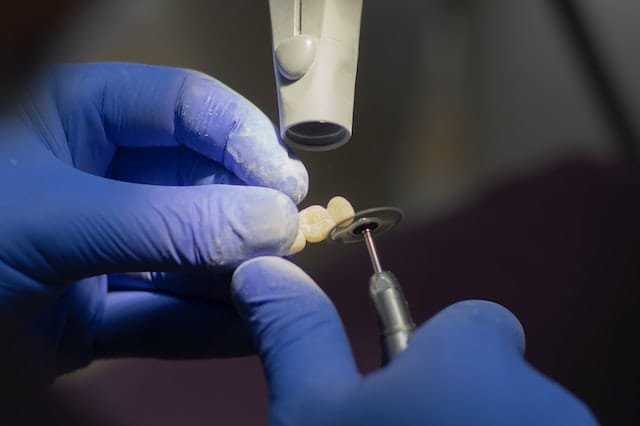
To prepare a tooth for a veneer, the dentist gently reshapes it to slightly reduce its size or align it with neighboring teeth. This is done by carefully removing a thin layer of enamel using specific instruments to achieve the final desired shape before bonding the veneer.
The patient may experience mild sensitivity after tooth preparation, especially when consuming hot or cold food and drinks. This is usually temporary and subsides shortly after the procedure.
Veneers and Bad Breath
Many patients wonder whether veneers are related to bad breath. Here are some important points that explain the possible connection:
– Dentists recommend brushing at least twice daily when you have veneers, especially after meals, to prevent bacterial buildup and remove food debris. Poor oral hygiene can lead to noticeable bad breath, and veneers can make the issue more obvious if plaque accumulates around them.
– Food particles can become trapped between teeth if veneers are not properly fitted. The dentist must determine whether bad breath is due to improper veneer placement or another underlying issue.
– Gum inflammation (gingivitis) can cause bad breath. In this case, the gums surrounding the veneers must be treated.
– Tooth decay under a veneer can also cause bad breath. This happens when bacteria accumulate in gaps and gradually reach the tooth’s nerve.
Materials Used for Veneers
Most materials used in veneers are relatively stable and of good quality. However, the final outcome heavily depends on the dental technician who fabricates them. Using specialized cameras and advanced software, the technician designs veneers with the appropriate size and shape to match the patient’s face and smile. The final shells are then fabricated to be highly durable with natural‑looking, vibrant shades.
Once these steps are completed, the veneers are sent to the dental clinic for the final try‑in and permanent bonding.
The Difference Between Veneers and Lumineers
Here are the main differences between traditional veneers and Lumineers:
– With conventional veneers, a thin layer of the tooth surface is removed (tooth preparation) before placing the veneer to achieve the desired shape.
– Lumineers are much thinner than traditional veneers, with a thickness of about 0.06 mm—similar to a contact lens.
– Lumineers can often be placed with little to no tooth reduction.
– Lumineers are suitable only for selected cases, usually patients who already have relatively straight, well‑aligned teeth.
– In some cases, Lumineers can be removed more easily than traditional veneers, which are generally more irreversible.
The Best Types of Dental Veneers
Because we care about patients’ best interests and want to raise awareness about their treatment options, we’ll highlight the most common and effective types of veneers, especially porcelain veneers, which are often considered the gold standard.
Porcelain Veneers
Porcelain veneers are among the strongest and most durable veneer options. They require more time to fabricate but offer a very natural, elegant appearance and are highly resistant to staining.
Porcelain veneers are usually more expensive than other types due to their superior strength and high‑quality esthetics compared to some composite alternatives.
Key advantages of porcelain veneers include:
– Porcelain veneers are highly aesthetic, with a translucent white color that reflects light similarly to natural enamel, resulting in a very natural‑looking smile. The bright, perfectly aligned teeth you often see on TV personalities and celebrities are typically porcelain veneers.
– Porcelain veneers are stain‑resistant. Surface stains can usually be wiped or polished away, helping the teeth stay bright white. Even if the patient frequently consumes colored drinks, veneers can be cleaned easily and maintained for many years.
– Porcelain shells are very durable and resistant over long periods of time. The patient only needs to care for them as they would natural teeth and avoid biting extremely hard objects.
– You can achieve a bright, attractive smile in a short time once porcelain veneers are placed, as the bonding procedure is relatively quick and simple in the dental office.
– Porcelain veneers can provide a long‑term solution for teeth that are heavily stained by smoking or highly pigmented beverages. Once placed, they can permanently mask these discolorations.
– Porcelain veneers help conceal various imperfections such as chips, cracks, and discolorations, giving the appearance of straight, even, and well‑aligned teeth.
Composite Veneers
Composite veneers—also called direct composite bonding or composite shells—are generally less expensive than porcelain veneers and can be completed in a shorter time. They usually require less tooth reduction during preparation.
Composite veneers are a good option for many patients seeking a faster, more budget‑friendly cosmetic solution.

Dr. Fares Matouq
– Bachelor’s degree in Dental Medicine and Surgery, Al‑Qalamoun University – Damascus
– Completed multiple courses in cosmetic dentistry and smile design
– 11 years of experience in restorative and cosmetic dentistry
Areas of interest and expertise:
– All types of dental prosthetics (bridges, crowns, and dental veneers including traditional veneers and Lumineers)
– Cosmetic dental procedures (esthetic fillings, tooth restorations, Hollywood smile makeovers)
– Comprehensive smile makeover planning and execution
– Root canal treatment and tooth extractions