
Keep in mind that children may not show any symptoms of tooth decay until they visit the dentist

So, delayed detection of tooth decay is itself a risk factor. Early signs and symptoms of cavities to watch for include:
Toothache
Tooth pain is one of the most classic signs of tooth decay in children. If a child complains of tooth pain for several days, it is likely due to a cavity. Toothache may appear suddenly without warning, or it may occur after eating or drinking.
Sensitivity to hot and cold
Complaints of pain and/or tooth sensitivity, especially while eating, usually result from damage to the tooth’s outer enamel layer. This exposes the inner nerves to certain foods and drinks, causing them to react and leading to sensitivity.
Brown or black spots on the teeth
White spots may appear on the teeth, usually near the gumline, indicating early enamel breakdown. If these white spots are not treated, they can progress into cavities.
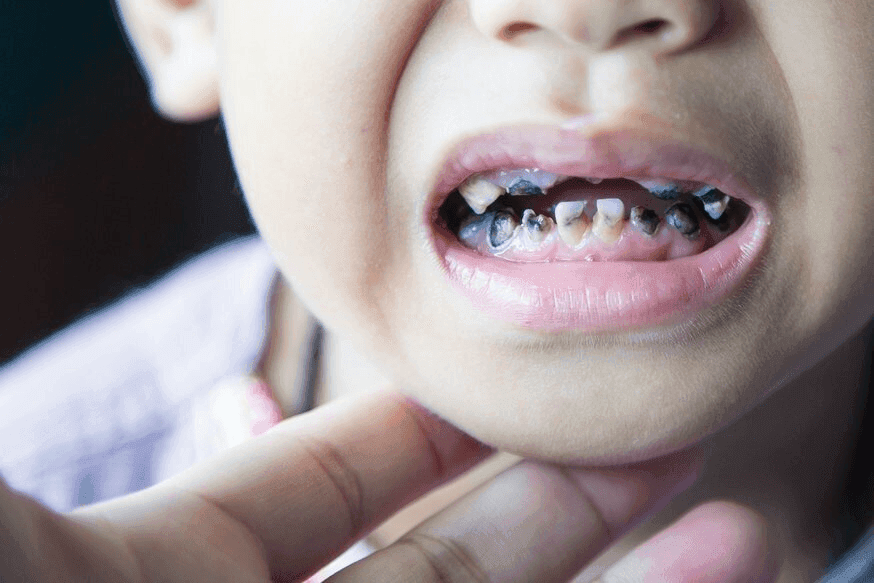
There is also a possibility that dental cavities will turn brown or black and cause significant structural damage to the tooth.
Holes in the teeth
Cavities often start as tiny pits in the teeth and areas of enamel erosion. Small brown or black spots may form and are an early sign of tooth decay. You might also notice a faint white line on the tooth surface near the gumline, which is usually an early indicator of cavities in children.
Diagnosing tooth decay in children usually involves a combination of visual examination and, in some cases, dental X‑rays. The following are some methods used to diagnose cavities in children:

Treatment of Tooth Decay in Children
The treatment of tooth decay in children depends on how advanced the decay is, as well as the child’s overall condition and specific needs. With various treatment options, decay can be removed and the tooth can be restored to a healthy, disease‑free state. The type of treatment also usually depends on whether the cavity affects a primary (baby) tooth or a permanent tooth. Possible treatment methods include:
Fillings
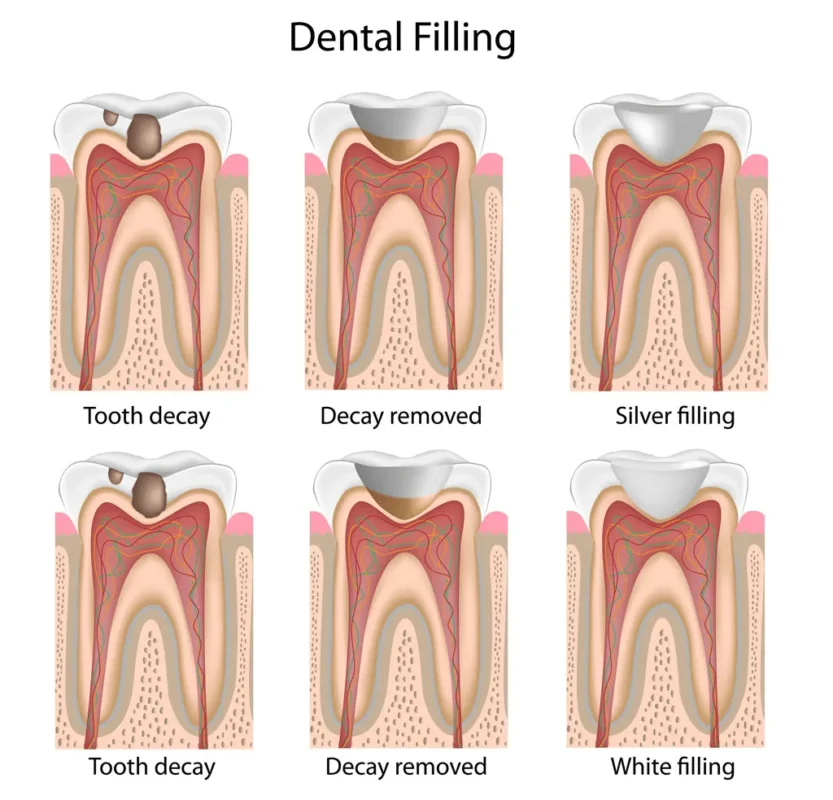
The most common way to treat cavities is with dental fillings. This procedure is used for shallow to moderate decay. The decayed portion of the tooth is removed first, then a tooth‑colored filling is placed to restore the tooth’s health and natural appearance.
Crowns
When decay is more extensive and has reached or severely compromised the nerve of a primary tooth, a crown is often needed. Depending on the case, crowns can be made of porcelain or white zirconia. The dentist first removes all decayed tooth structure to restore health, then fills the tooth and finally covers it with a crown to protect it and improve its appearance.
Root Canal Treatment
If tooth decay extends deep into the inner pulp and shows signs of nerve involvement in a permanent tooth, root canal treatment becomes necessary before placing a metal or porcelain crown. At this stage, the tooth is severely diseased or infected, and the decay has reached the nerve, making root canal therapy the only alternative to extracting the tooth completely.
The dentist first removes the decayed pulp from inside the tooth, then places medication into the root canal to treat any infection. After the inside of the tooth has healed, the dentist fully restores the tooth by replacing the removed pulp with a filling material.
Tooth Extraction
For primary teeth that are so badly decayed that an abscess has formed, extraction is the only option. Extraction is also used for permanent teeth that have been neglected to the point where they are too damaged to be repaired.
After the dentist removes the diseased tooth, the remaining space can cause neighboring teeth to drift out of position. To prevent complications after extraction, a space maintainer is recommended in the area of an extracted baby tooth, and either a bridge or a dental implant is recommended where a permanent tooth has been removed.
Prevention of Tooth Decay in Children
Want to prevent cavities in children? Follow these four simple guidelines:

Taking your child to the pediatric dentist at the Dental Center in Batal Complex
Schedule regular dental check‑ups at the Dental Center in Batal Complex. Children should see their dentist every six months for a routine exam and professional cleaning.
Regular dental visits not only help prevent tooth decay but also reduce the risk of gum disease.
Other Tooth Decay Conditions in Children
Tooth decay in children can develop due to several factors, including poor oral hygiene, excessive sugar intake, inadequate fluoride exposure, genetic predisposition, or certain medical conditions that affect dental health. Other situations include:
Treatment of tooth decay in 4‑year‑old children
Treatment for cavities in a 4‑year‑old usually involves removing the decayed portion of the tooth and restoring it with a dental filling. In some cases, a crown may be needed if the decay is extensive. The dentist may also provide guidance on proper oral hygiene, dietary changes, and the use of fluoride to help prevent further decay.
Treating tooth decay in children at home
While professional dental care is essential for treating cavities, some measures can be taken at home. These include maintaining proper oral hygiene by brushing the child’s teeth twice a day with fluoride toothpaste, helping them floss, reducing sugary foods and drinks, and encouraging a healthy, balanced diet. However, home care alone is not enough to treat advanced cavities, so professional dental treatment is necessary.
Tooth decay in 6‑year‑old children
Cavities in a 6‑year‑old can vary in severity. They may affect primary teeth or newly erupted permanent teeth. Treatment options may include fillings, crowns, or other restorative procedures depending on how extensive the decay is. Good oral hygiene practices, dietary modification, and appropriate fluoride use are often recommended to help prevent additional decay.
Tooth decay in 5‑year‑old children
Cavities in a 5‑year‑old can also involve decayed primary teeth or newly emerging permanent teeth. Similar to treatment for a 6‑year‑old, the dentist may recommend fillings, crowns, or other suitable restorative options. Emphasis will be placed on oral hygiene, dietary changes, and the use of fluoride to reduce the risk of future cavities.
Tooth decay in 1‑year‑old children
Tooth decay can appear as early as one year of age and is often referred to as Early Childhood Caries (ECC) or baby bottle tooth decay. It can result from prolonged exposure of a child’s teeth to sugary liquids such as milk or juice, especially when given at bedtime or continuously in a bottle. Treatment may include removing decayed areas, applying fluoride varnish, and providing guidance on proper feeding practices and oral hygiene for infants.
What tooth decay looks like in children
Tooth decay in children appears as cavities or carious lesions. Cavities are areas of tooth structure that have been damaged and dissolved by acid‑producing bacteria. These areas show up as holes or pits on the tooth surface.
Treatment of tooth decay in 3‑year‑old children
Treating cavities in a 3‑year‑old generally follows a similar approach to that used in older children. The dentist will assess how far the decay has progressed and may recommend fillings, crowns, or other appropriate treatments. Education on oral hygiene, dietary adjustments, and fluoride use will also be provided to prevent further decay and support good oral health.
Pain from tooth decay in 6‑year‑old children
Cavities can cause pain and discomfort in a 6‑year‑old. The pain may present as sensitivity to hot or cold temperatures or sweet foods, pain while chewing, or spontaneous toothache. Treatment will focus on addressing the underlying cause of the pain, which often involves removing the decayed portion of the tooth and providing suitable restorative care.
Treatment of tooth decay in 5‑year‑old children
The management of tooth decay in a 5‑year‑old follows principles similar to those used in older children. Depending on the severity of the cavities, the dentist may recommend fillings, crowns, or other appropriate treatments. Oral hygiene practices, dietary modifications, and fluoride use are crucial in preventing further decay and maintaining oral health.
Frequently Asked Questions About Tooth Decay in Children
Extracting decayed teeth in children is not always necessary. The decision depends on how severe the decay is, where the tooth is located, and the potential impact on oral health. In some cases, the dentist may choose other treatments, such as fillings or crowns, to restore the tooth. However, when decay is extensive or the tooth is causing significant problems, extraction may be considered.
Relieving cavity‑related pain in children involves addressing the underlying cause and providing appropriate dental treatment. Over‑the‑counter pain relievers, such as acetaminophen, may help. However, it is essential to consult a dentist, who can identify the source of the pain and treat it effectively.
Tooth decay in children can be serious if left untreated. It can progress and lead to complications such as pain, infection, difficulty eating, speech problems, and potential damage to developing permanent teeth. Early intervention and proper dental care are essential to prevent the progression of tooth decay and its associated risks.
Yes, dental fillings are beneficial for children in treating tooth decay. Fillings help restore and strengthen the tooth structure by filling the cavity created by decay. They prevent further deterioration, restore function, and preserve the integrity of the affected tooth.

Teething molars in children can cause some signs and symptoms, including: