
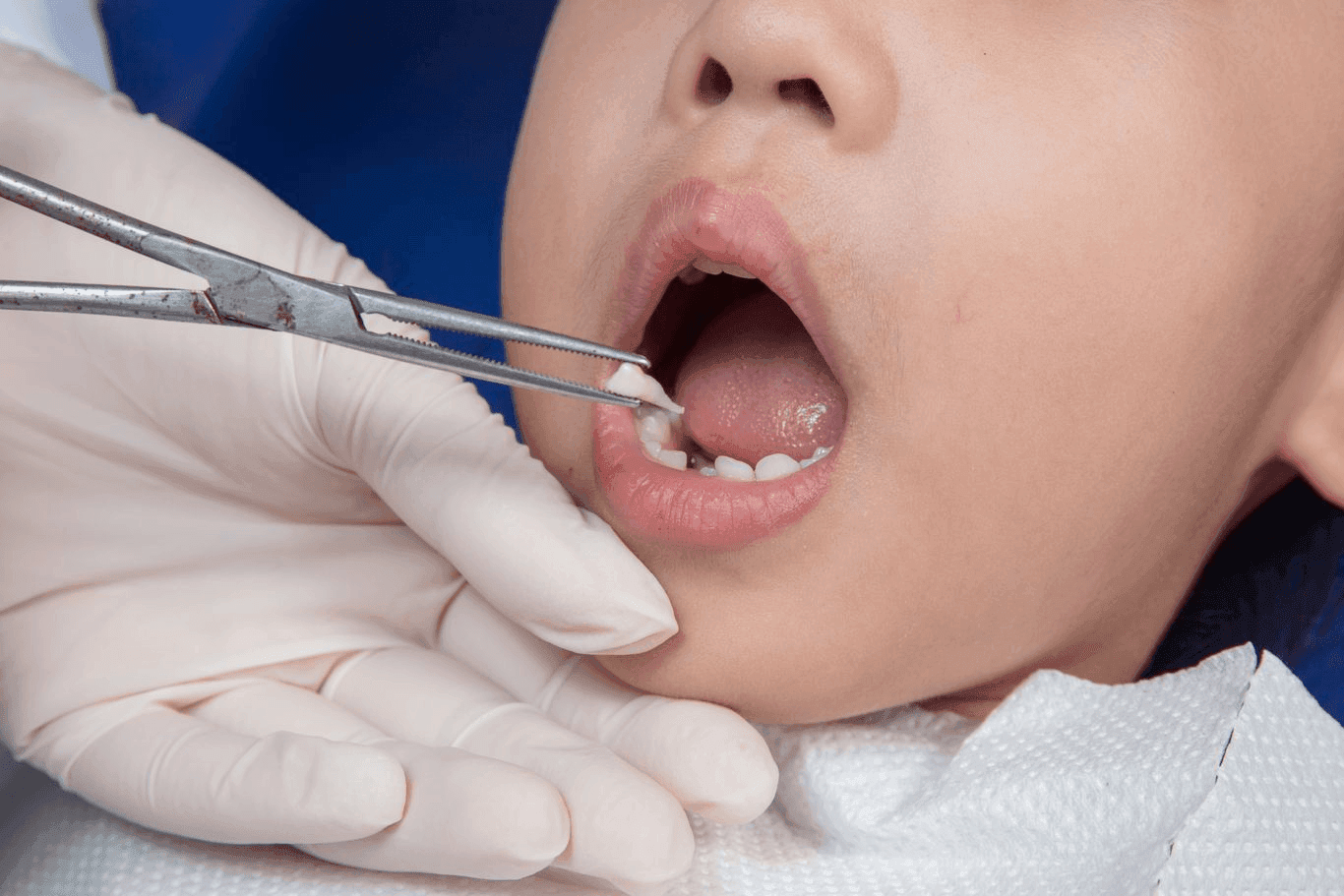

Many parents worry when their children’s baby teeth start to fall out. In reality, this is a completely normal process during which the 20 primary (baby) teeth are gradually replaced by permanent teeth.
A child’s mouth contains 20 primary teeth, while an adult typically has 32 permanent teeth. The first baby teeth usually appear around 6 months of age. By about 3 years old, all 20 primary teeth have usually erupted.
Find out everything you need to know about the teething and tooth-replacement cycle, and how to handle the loss of your child’s baby teeth.
Tooth Eruption and Shedding Timeline in Children
The loss of baby teeth is a process that usually takes about 6 years from start to finish. Primary teeth begin to loosen and fall out on their own to make room for permanent teeth at around age 6. Naturally, they do not all fall out at the same time.
Tooth replacement can start as early as age 4, or as late as age 7. In general, baby teeth fall out in roughly the same order they first appeared.
Ages 6–7: Central Incisors
Because they are the first to erupt, the central incisors are usually the first baby teeth to fall out, at about 6 or 7 years of age.
The lower central incisors are usually lost first, making room for the permanent teeth. The upper central incisors follow shortly after.
Ages 7–9: Lateral Incisors
After the four central incisors are lost, the lateral incisors are next to fall out to allow the permanent lateral incisors to emerge. The upper lateral incisors often fall out first, usually between 7 and 9 years of age.
Ages 9–11: First Molars and Canines
The first primary molars and canines (cuspids) typically fall out between ages 9 and 11. Usually, the lower canines are lost first, followed by the upper canines. After that, the first lower and upper molars are shed.
Ages 11–13: Second Molars
The last baby teeth to fall out are the four second primary molars. These final baby teeth are usually lost between ages 11 and 13.
The child’s jaws also grow and develop throughout this tooth-shedding process. By about age 13, most children have lost all 20 of their primary teeth and have jaw space adequate to accommodate the permanent teeth.
Delayed Tooth Replacement in Children
Once your child starts losing baby teeth, you get used to seeing gaps in their smile. However, sometimes those spaces remain for longer than you expected.
After a baby tooth falls out, it can take up to six months for the corresponding permanent tooth to erupt in its place.
In some cases, the space can remain empty for a longer period, which can understandably cause parents to worry about their child’s dental development.
Causes of Delayed Tooth Replacement in Children
Although delayed tooth replacement can simply be due to permanent teeth taking longer than usual to erupt, there may be other causes, which should be evaluated and diagnosed by a dentist. These may include, for example:
– Congenital absence of permanent teeth (hypodontia)
– Impaction or incorrect position of a permanent tooth
– Thick or dense gum tissue overlying the tooth
– Local infection or trauma to the primary or permanent tooth
– Systemic or developmental conditions affecting tooth formation and eruption
Can Children Replace Their Teeth Twice?
In most cases, each primary tooth is replaced by a permanent tooth only once. The normal transition from baby teeth to permanent teeth typically occurs between ages 6 and 12.
However, there are some situations where teeth may effectively be “replaced” more than once in children, such as:
– When a permanent tooth is badly decayed or fractured and must be extracted and replaced with a dental prosthesis
– When a permanent tooth is lost due to trauma and later restored with an implant or other long-term replacement (once growth is complete)
– When extra (supernumerary) teeth are present and need to be removed and the area subsequently restored
Problems Associated with Tooth Replacement in Children
If a baby tooth is lost too early, is not lost in the typical sequence, or if a baby tooth falls out and is not replaced by a permanent tooth within about three months, several issues may arise.
Potential consequences of prematurely losing baby teeth, which can vary from child to child, include:
– Shifting or drifting of neighboring teeth into the empty space
– Loss of space needed for the permanent tooth to erupt properly
– Crowding and misalignment of the permanent teeth
– Bite (occlusion) problems and jaw growth disturbances
– Increased likelihood of needing orthodontic treatment later on
To reduce the risk of these problems, regular checkups with your family dentist are extremely important. It is almost always better to restore a baby tooth with a simple filling when decay first appears, rather than extracting it too early. When extraction is necessary, placing a space maintainer is often essential to preserve the space for the permanent tooth.
Early Tooth Replacement in Children
Early tooth replacement in children refers to the situation in which permanent teeth begin to erupt and replace primary (baby) teeth earlier than the typical age range. This can occur due to various factors, such as genetics or individual variations in growth and dental development.
In most cases, early tooth replacement is considered a normal variation and is not a cause for concern, as long as the teeth and jaws are developing in a healthy, balanced way and the bite remains functional.
Signs That Your Child Is Starting to Replace Teeth
Common signs that your child is entering the tooth-replacement phase include:
– Increased mobility (looseness) of one or more baby teeth
– Slight discomfort or tenderness around loose teeth
– Visible gaps where teeth have fallen out
– A new tooth erupting behind or in front of a baby tooth
– Mild gum redness or swelling around erupting permanent teeth
– Occasional difficulty biting into hard foods due to loose teeth
When Should Parents See a Dentist at the Dental Center in Batal Complex?
It is recommended to take your child to the dentist at the Dental Center in Batal Complex around the age of two or three. This helps your child become familiar and comfortable with the dental office and future checkups.
At the same time, parents gain reassurance that there are no oral health problems to worry about. The dentist can confirm that there is no tooth decay and that the child’s teeth and jaws are developing properly.
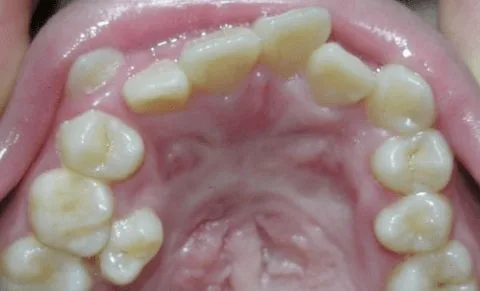
It is very common for permanent teeth to start erupting while the baby teeth are still in place. This “double row” of teeth is often temporary. If the situation persists, it is important to see a dentist to assess the case and decide whether any intervention is needed.
The timing of baby-tooth loss varies widely from one child to another. You generally should not be overly concerned if your child’s baby teeth take longer than average to fall out. However, if your child is unsure, uncomfortable, or in pain, schedule a dental visit for professional advice.
The Usual Order of Tooth Replacement in Children

Although the exact timing of tooth eruption and shedding can vary from child to child, the typical order of tooth replacement is:
1. Lower central incisors
2. Upper central incisors
3. Upper and lower lateral incisors
4. First molars and canines
5. Second molars