

If you feel self-conscious about missing teeth, are struggling with loose or uncomfortable dentures, or don’t want to have healthy tooth structure removed for a traditional bridge, talk to a dentist at Al Batal Specialized Dental Center to find out whether dental implants are a good option for you.
Dental implants are a common and highly effective way to replace missing teeth and are designed to blend in naturally with your existing teeth. They are an excellent long‑term solution for restoring your smile.
Dental implants are made of titanium and other biocompatible materials that act as posts surgically placed into the upper or lower jawbone. They function as a stable anchor for replacement teeth and are considered one of the most important advances in dentistry over the past 40 years.
What are dental implants?
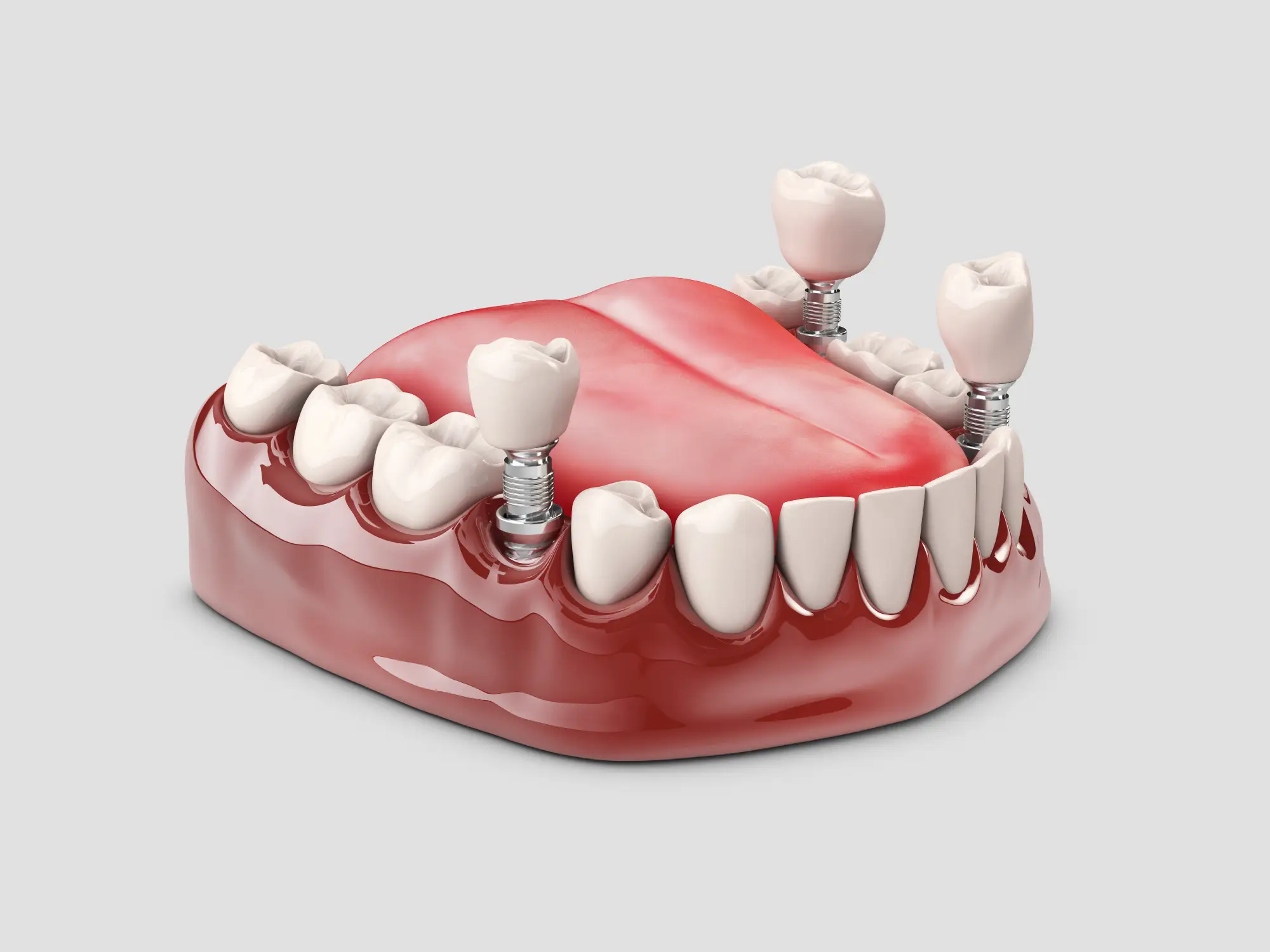
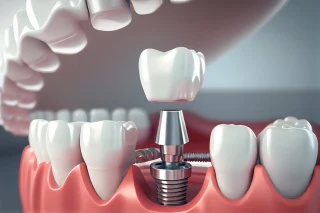
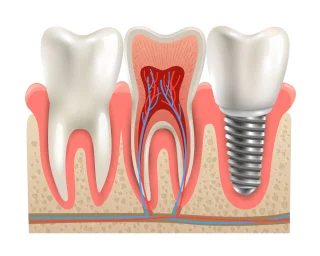
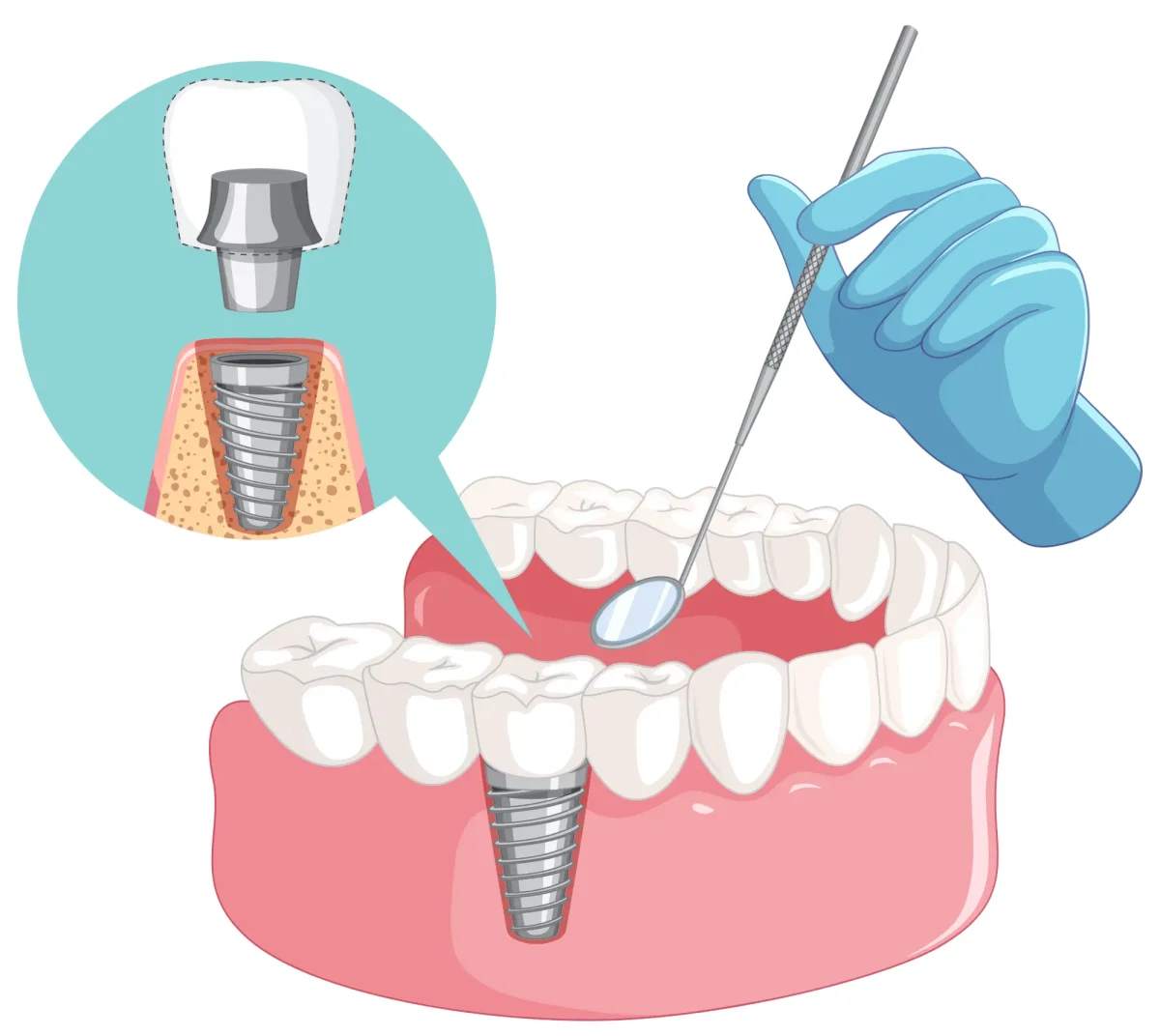
Dental implants are titanium screw‑shaped fixtures that are surgically placed into the jawbone below the gum line to replace the tooth root. Over time, they fuse with your jawbone, creating a solid foundation for your dental restoration.
The implant effectively serves as a substitute for the missing tooth root. It not only integrates with the bone like a natural root, but also helps stimulate and preserve the jawbone structure.
A connector, known as an abutment, is attached to the top of the implant to link it with the replacement tooth.
Finally, a custom‑made crown (the visible replacement tooth) is fabricated to match your natural teeth, completing the dental implant process.
Reasons and Indications for Dental Implants
Dental implants are a widely used and highly successful solution for replacing missing teeth. They offer numerous benefits and are considered the gold standard for tooth replacement. The following are some of the main reasons and indications that make dental implants a preferred choice:
- Replacing one or more missing teeth without affecting adjacent teeth.
- Providing a fixed, stable alternative to removable dentures.
- Preserving jawbone and preventing bone loss after tooth extraction.
- Improving chewing efficiency and speech compared with traditional dentures.
- Enhancing facial appearance and preventing the sunken look caused by missing teeth.
- Providing a long‑term, durable solution with high success rates.
Assessment and Diagnosis for Dental Implants
Diagnosing a case for dental implants requires a comprehensive evaluation of the patient’s oral health and specific factors that can influence the success of the procedure. Key aspects considered during diagnosis include:
- Full medical and dental history, including systemic conditions and medications.
- Clinical examination of teeth, gums, and bite (occlusion).
- Assessment of gum health and presence of periodontal disease.
- Evaluation of jawbone volume and density at the planned implant site.
- Radiographic imaging, such as panoramic X‑rays and CT or CBCT scans.
- Assessment of the relationship to vital anatomical structures, such as nerves and sinuses.
- Review of oral hygiene habits and patient commitment to aftercare.
Types of Dental Implants and Modern Techniques
There are several types of dental implants and techniques available at Al Batal Specialized Dental Center in Jeddah, including:
Conventional Dental Implants
This is the most commonly used type of dental implant. The implant is surgically placed directly into the jawbone and consists of a titanium post that acts as an artificial tooth root. Endosteal implants can support single crowns, bridges, or implant‑supported dentures.
Laser‑Assisted Dental Implants
Laser technology can be used during implant surgery to perform precise soft‑tissue procedures when placing the implant. In many cases, this eliminates the need for sutures. The laser’s antimicrobial effect reduces the risk of infection and stimulates healing cells in the area, which helps minimize swelling and discomfort.
The use of lasers can also promote new bone formation and assist the integration of the implant into the jawbone. In addition, lasers are used to contour the gum tissue for a more natural, aesthetic emergence profile around the implant crown.
3D‑Guided Dental Implant Placement
Cone Beam Computed Tomography (CBCT): CBCT provides detailed 3D images of the oral and maxillofacial structures, allowing for highly accurate implant planning, evaluation of bone quality and quantity, and identification of critical anatomical landmarks.
Advanced 3D digital imaging has made implant procedures faster, more predictable, and more precise, improving both safety and outcomes.
Who Is a Good Candidate for Dental Implants?
Do you have one or more missing teeth? Do you want to improve your appearance? Are you looking for a permanent, natural‑looking solution for missing teeth that will restore your ability to speak and chew normally?
If you have healthy gums and sufficient bone to support the implant, dental implants are often the ideal solution for replacing missing teeth.
Here are some of the main benefits many of our patients at Al Batal Specialized Dental Center have experienced with dental implants:
- Natural look and feel that closely mimics real teeth.
- Improved chewing, speech, and overall comfort.
- Prevention of jawbone shrinkage and facial sagging.
- No need to grind down adjacent healthy teeth, as with traditional bridges.
- High long‑term success rates and durability.
- Improved confidence and quality of life.
Dental Implant Stages and Procedure – Step by Step
When it comes to the implant procedure itself, the following step‑by‑step guide outlines how dental implants are typically placed in a proper, structured manner.
1 – Pre‑Operative Preparations
Your implant surgery first needs to be fully evaluated and approved. In many cases, the preparatory phase takes longer than the surgical placement of the implant itself.
This stage usually includes consultations, clinical examinations, X‑rays, CBCT scans if needed, treatment planning, and addressing any existing oral health issues such as gum disease or decayed teeth before proceeding with implant placement.
2 – Bone Grafting
If your X‑rays or CT scans show that there is insufficient bone in your jaw to securely hold an implant, your dentist may discuss options for bone augmentation or grafting.
If bone grafting or ridge augmentation is needed before the actual implant placement, it may take about 4–12 months for the bone to heal and be ready to receive the implant.
3 – Conventional (Two‑Stage) Implant Placement
The traditional method typically involves two separate surgical stages spaced about three to six months apart. The additional healing time allows the implant to integrate with the bone before it is loaded with a restoration.
In the first stage, the implant is placed into the jawbone and left covered beneath the gum to heal and osseointegrate. In the second stage, the implant is uncovered, and a healing abutment or final abutment is attached, followed by the crown or prosthesis.
4 – How Long Does the Dental Implant Process Take?
Dental implant treatment is a multi‑stage process that can take anywhere from 3 to 12 months to complete. The total duration depends on how much preparatory work is needed and how well the implant integrates with the bone after placement. In many cases, the entire process is completed in about five or six main steps.
These stages are usually minor outpatient procedures performed in the dental clinic. Each visit may take from about 20 minutes to a few hours, depending on the number of implants and teeth being replaced.
5 – Results After Dental Implant Placement
Dental implant surgery has demonstrated significant and predictable outcomes in:
- Restoring function and chewing ability to a level close to natural teeth.
- Improving aesthetics of the smile and facial profile.
- Stabilizing dentures and eliminating slippage and discomfort.
- Preserving the jawbone and preventing further bone loss.
- Enhancing self‑confidence and overall quality of life.
Dental Implant Costs
No two implant cases are exactly the same, which is why costs are usually presented as a range rather than a fixed amount.
Dental Implant Prices in Jeddah, Saudi Arabia
Several factors influence the final cost of your new tooth or teeth, including:
- The number of implants required.
- The type and brand of implant system used.
- Need for additional procedures such as bone grafting or sinus lifting.
- The type of restoration (single crown, bridge, or implant‑supported denture).
- Complexity of the case and any underlying oral health conditions.
The cost of a single dental implant in Jeddah, Saudi Arabia generally ranges from 2,000 to 5,000 SAR.
Health Insurance Options for Covering Implant Costs
In Saudi Arabia, health insurance coverage varies depending on the insurer and the details of the specific policy. While implant treatment is not universally covered under all dental plans, some insurance companies offer specialized dental coverage that may include implant procedures, especially when there is a documented medical or functional need, such as bite problems (malocclusion) or jawbone loss.
Guidelines for Choosing a Dental Implant Dentist
When choosing a dentist to perform your dental implant treatment, it is important to consider several factors to ensure high‑quality care and successful results. Key guidelines include:
- Verifying the dentist’s qualifications, training, and experience in implant dentistry.
- Reviewing before‑and‑after cases and patient testimonials when available.
- Ensuring the clinic uses modern imaging and implant planning technologies.
- Asking about the type and brand of implant systems used.
- Discussing the full treatment plan, expected results, and possible risks.
- Confirming follow‑up and maintenance protocols after implant placement.
Dental Implant Services at Al Batal Specialized Dental Center
At Al Batal Specialized Dental Center, one of the leading clinics for dental implants in Jeddah, you can expect a comprehensive range of implant services to restore missing teeth and improve your oral health. Common dental implant services include:
- Single‑tooth implants to replace individual missing teeth.
- Implant‑supported bridges to replace multiple adjacent teeth.
- Implant‑retained or implant‑supported dentures for full‑arch rehabilitation.
- Immediate implants in selected cases following tooth extraction.
- Bone grafting and sinus lift procedures to build up insufficient bone.
- 3D‑guided implant planning and placement for greater accuracy and safety.
Frequently Asked Questions About Dental Implants
What is the cheapest alternative to dental implants?
Partial dentures made of metal or acrylic are usually the most affordable and cost‑effective alternative to dental implants. They fill the gaps left by missing teeth and can be removed for cleaning.
What are the risks of dental implants?
A less common but possible risk of dental implant surgery is nerve injury affecting the face and gums, which may cause pain, numbness, or tingling. There is also a risk of damage or trauma to adjacent structures near the implant site, such as neighboring teeth or blood vessels.
How long do dental implants last?
The average lifespan of dental implants is roughly 10 to 30 years, and with proper care many implants can last even longer.
What is the average basic cost of a single implant?
The average basic cost for a single dental implant is about 3,900 SAR.
What are the disadvantages of dental implants?
Potential drawbacks include infection, damage to adjacent teeth, delayed bone healing, nerve injury, prolonged bleeding, and in rare cases, jaw fractures—especially in very complex or compromised cases.
Can dental implants really last 20–30 years?
With modern techniques, high‑quality materials, and proper post‑operative care and maintenance, dental implants can often last 20–30 years or more.
How long does the pain last after dental implant surgery?
In most cases, discomfort peaks within 3–5 days after the procedure and then subsides relatively quickly. Pain can usually be controlled with prescribed or over‑the‑counter pain medication.
How long does the dental implant procedure and healing take?
The surgical placement of a dental implant typically takes about 1–2 hours, depending on the case. Bone healing and integration of the implant (osseointegration) usually take about 3–6 months.
Are dental implants successful?
Dental implants are among the most successful procedures in modern dentistry. They are designed to be a long‑term, often lifetime solution; however, several factors can shorten their lifespan, such as poor oral hygiene, smoking, uncontrolled systemic diseases, or irregular follow‑up visits.
Who is not a good candidate for dental implants?
If you have active gum disease, uncontrolled periodontal problems, or other serious oral health issues, you may not be an ideal candidate for implants until these conditions are treated and stabilized.
Can dental implants fail or fall out?
Yes, implant failure is possible, but it is relatively rare when proper planning, placement, and aftercare are followed.

What is the success rate of dental implants?
The success rate of dental implants is approximately 95% under appropriate conditions and with good oral hygiene and regular dental check‑ups.