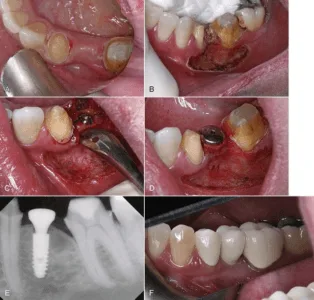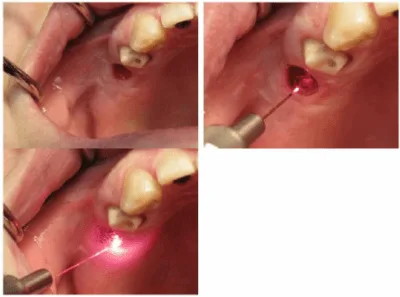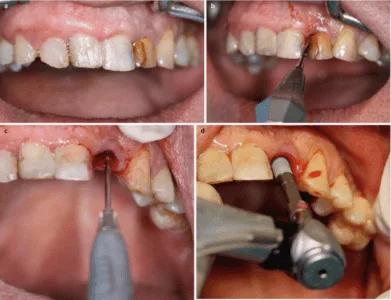

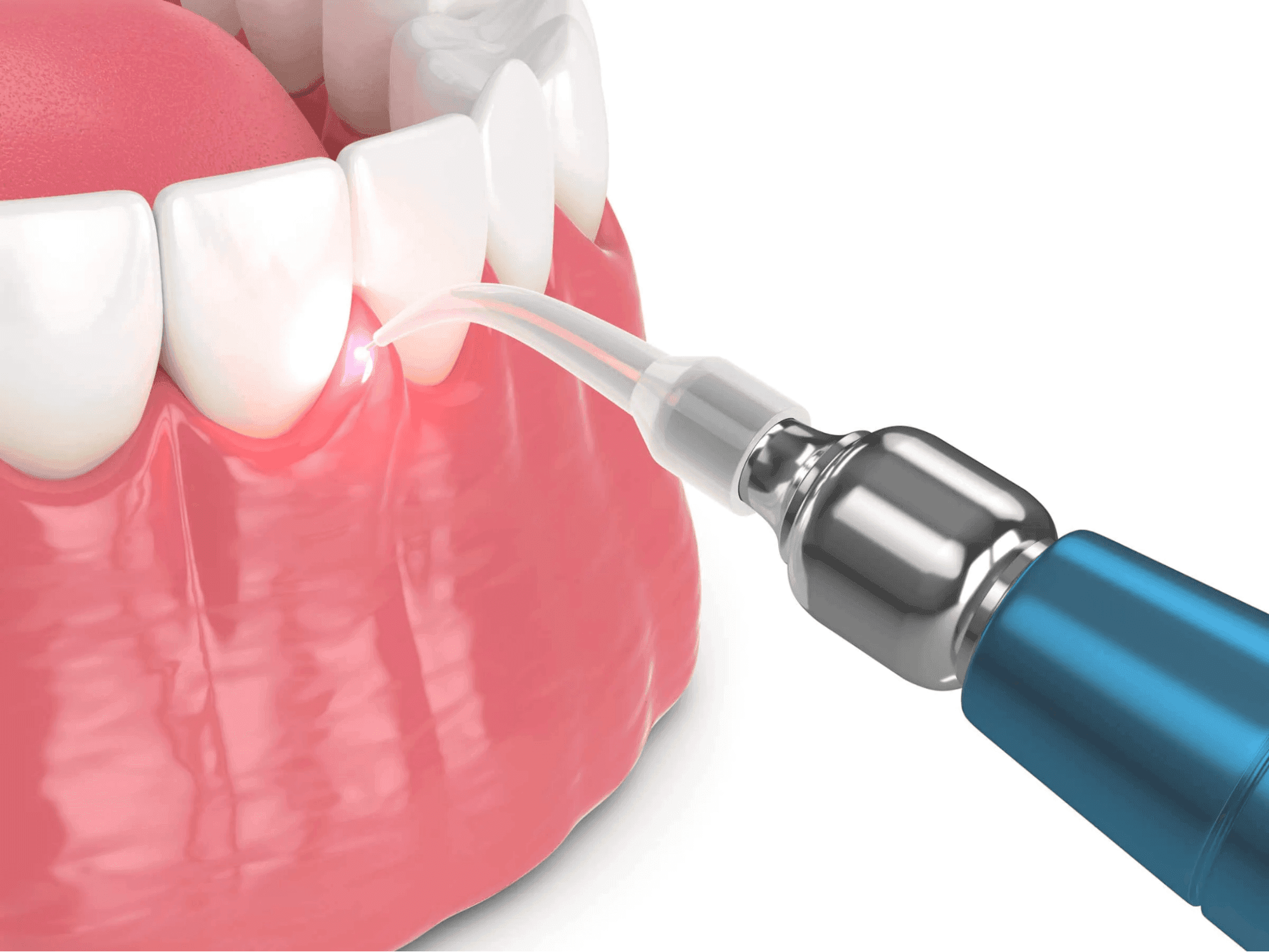

When most people think about dental implants, they picture the traditional type: a metal post surgically inserted into the jawbone with a porcelain crown fixed on top. While this is still the most common kind of dental implant, there is now another option: laser dental implants.Dental lasers are medical devices that use precisely focused light to treat tissues. Each laser emits light at a specific wavelength and can be aimed very accurately at small areas, making it ideal for very delicate dental surgery instead of a drill or scalpel.Laser technology is a safe and gentle alternative to traditional dental tools. It allows oral surgeons and dentists to perform more complex procedures, reduce blood loss, minimize post‑operative discomfort, lower the risk of wound infection, and promote better wound healing—helping patients get back to smiling sooner.The principle of laser dental implants When people first face the need for tooth replacement, they usually have many questions that only a dental implant specialist can answer. One of the most important is: what exactly are laser dental implants?With laser dental implants, the scalpel is replaced by a laser to prepare the site and place the implant into the bone. Laser implant surgery is not a different “type” of implant, but rather a different technique with advantages compared to the conventional method. Clinical experience has shown that the surgical phase can be shortened by about 30–40%, soft tissues are handled more gently, and the recovery period is much easier.Laser dental implant treatment involves using a powerful laser to disinfect and prepare the area where the implant will be placed, helping ensure that no bacteria or debris remain that could lead to infection. A small incision is then made in the gum line and the implant post is inserted.Once the implant is positioned, the laser is used to help stabilize and secure it in place. The procedure is relatively quick and minimally painful, and it creates a stable foundation for the new tooth. In many cases, the entire procedure can be completed in a single visit.You can review our patients’ experiences with immediate dental implants and laser dental implants at the Dental Center of Batal Specialized Complex in Jeddah.You can also visit our guide to dental implants in Jeddah and learn about the best dental implant clinics in Jeddah.
Types of Laser Dental Implants
Laser technology can be used at different stages of implant treatment. When we classify “types” of laser dental implants based on the way lasers assist or replace tools in current implant procedures, they include:
Non‑Surgical Laser Dental Implants
Laser techniques can be employed in minimally invasive procedures such as laser‑assisted implant site preparation or laser‑assisted tissue healing.A laser can be used to gently and precisely prepare the implant site in the jawbone, potentially reducing the need for traditional drilling methods. In addition, lasers can be used to stimulate tissue healing and promote faster recovery after implant placement.
Laser Dental Implants with Minor Surgery
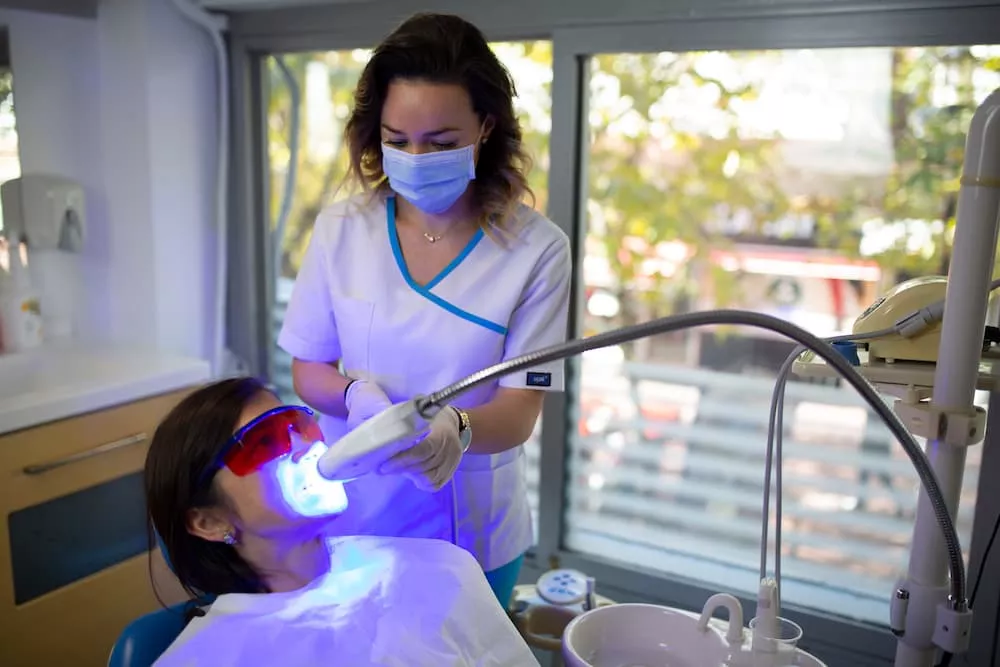
In some cases, lasers are used in combination with minor surgical procedures to place dental implants. The laser helps create precise incisions in the gum tissue, which reduces bleeding and supports faster healing.
Advantages of Laser Dental Implants
One of the major advantages of laser dental implants is that the technique is less invasive and more comfortable for patients. Laser beams operate almost silently, in contrast to the high‑pitched noise and strong vibrations of traditional dental drills. Using lasers during implant surgery offers several important benefits, including:
Disadvantages of Laser Dental Implants
Although laser dental implants are associated with a lower risk of infection and faster healing times, there are some drawbacks that should be considered before choosing this option, including:
Steps of Laser Dental Implant Placement
The steps for laser dental implant placement at Batal Specialized Complex in Jeddah typically include:
The Difference Between Laser and Conventional Dental Implants
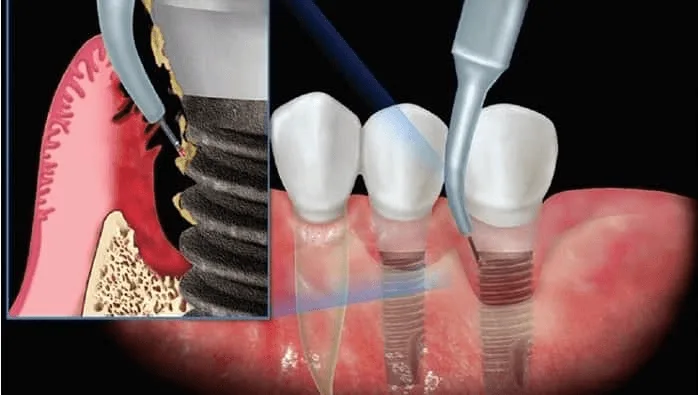
Laser therapy for peri‑implantitis (inflammation around the implant) promotes wound healing by stimulating the mitochondria in cells to produce more energy (ATP), which supports faster tissue repair. The laser also helps control bleeding by sealing small blood vessels, which improves visibility and enhances the speed and precision of the procedure.Traditional removal of infected tissue (also called mechanical debridement) in mild to moderate cases is a surgical procedure. Mechanical debridement is often not fully effective at eliminating bacterial biofilm within the grooves and threads of an implant because these areas are hard to access.It can also cause significant damage to the implant surface, making it more prone to biofilm buildup and reducing the chances of successful osseointegration. Even with rigorous oral hygiene to limit infection, a scratched implant surface can become an ideal site for bacterial growth.In more advanced cases of peri‑implantitis, bone loss and implant failure occur more frequently with conventional treatment. As with any surgical procedure, the patient may experience significant pain and a healing period that can last several months, which may undermine their confidence in both the procedure and the provider.By contrast, lasers are used in implant dentistry as follows:
Pre‑Operative Instructions for Laser Dental Implants
Pre‑operative instructions for laser dental implants may vary depending on the dental practice and the dentist’s recommendations. However, some general guidelines include:
Duration of the Laser Dental Implant Process
The time required for laser dental implant treatment varies based on factors such as the number of implants, case complexity, and each patient’s healing capacity. The initial surgical appointment to place the implants typically takes a few hours.However, the entire implant process extends over several months. This includes the healing period during which the implants fuse with the jawbone (osseointegration), followed by additional visits to place the abutments and final prosthetic restorations (crowns, bridges, or dentures).
Results of Laser Dental Implants
Results of laser dental implants differ from person to person based on oral health, the quality and accuracy of implant placement, and adherence to proper post‑operative care.When performed by an experienced implant dentist, laser‑assisted implants can achieve highly successful outcomes, including better aesthetics, full functional restoration of missing teeth, and long‑term stability.Individual results will vary, and following post‑operative instructions and maintaining excellent oral hygiene are essential for maximum success and implant longevity.Regular follow‑up appointments are recommended to monitor healing and confirm that the implants are functioning properly.
Laser Dental Implants: Before and After
Before and after laser dental implant treatment, patients typically notice clear differences in the appearance and function of their teeth as well as overall oral health. Key changes may include:
The Best Laser Dental Implant Clinic in Jeddah
If you are looking for a high‑quality clinic for laser or conventional dental implants, you are welcome to contact the clinics at Batal Specialized Complex in Jeddah. Our clinics are staffed by experienced, highly qualified dentists who use modern equipment, and we provide a full range of advanced dental services in Jeddah.Batal Specialized Complex in Jeddah is one of the best places to receive dental implants for several reasons. First, the clinic offers high‑quality implants at affordable prices. Second, the clinic has a team of highly skilled specialists in implant surgery. Finally, we provide many advantages compared with other tooth‑replacement options such as dentures and bridges.Some benefits of dental implants include improved self‑confidence and quality of life, better appearance, greater comfort, and restored chewing function. Implants are also very durable and can last for many years.Unlike other tooth‑replacement methods, implants do not require special maintenance and are very easy to care for.
Post‑Operative Instructions After Laser Dental Implants
To preserve your implant results and ensure long‑term success, keep the following recommendations in mind:
Cost of Laser Dental Implants
Dental implants are among the most common and widely used procedures in modern dentistry. They are used to replace missing teeth in both adults and, in specific situations, younger patients. Implants are made of titanium, a biocompatible material that is well accepted by the body.The cost of dental implants varies according to several factors, including the clinic’s location, the type of implant, and the materials used. In general, implants are more expensive than other restorative options such as crowns or bridges.Several factors contribute to this higher cost, including:Despite the higher price, dental implants are a popular option because they offer benefits that other restorative procedures cannot provide. Implants are permanently anchored into the jawbone and do not rely on adjacent teeth for support, unlike bridges and some types of crowns. As a result, they are more durable and, with proper care, can last for many years. They also look and feel like natural teeth, making them a preferred choice for patients who want a permanent solution to restore their smile.
Who Is a Candidate for Laser Dental Implants?
Laser dental implants are considered a relatively straightforward option for replacing missing teeth. The procedure uses a laser to create a small opening in the jawbone where the implant is inserted. This approach offers several advantages over traditional implant surgery, including shorter recovery time and less pain and swelling.In addition, laser dental implants are less likely to cause damage to the surrounding teeth. As a result, they are often the best option for people who have lost one or more teeth. The dentist will also evaluate whether the patient has sufficient healthy, stable hard and soft tissue at the intended implant site.
Who Is Not a Candidate for Laser Dental Implants?
There are certain situations in which a person may not be an ideal candidate for laser dental implants.
Tips from the Dental Center at Batal Specialized Complex to Maintain Laser Dental Implants
Photos of Laser Dental Implants