

Table of content
ToggleWhen Do Wisdom Teeth Come In?
Many people wonder: when do wisdom teeth actually come in? Wisdom teeth usually erupt in the late teenage years or early twenties. Sometimes they can cause problems if there isn’t enough room in the mouth or if they don’t come in straight. There are specific symptoms that can help determine whether some or all wisdom teeth need to be removed, or whether they are coming in normally without causing issues.
Read also: How to Treat a Wisdom Tooth
Signs That a Wisdom Tooth Is Coming In
Dental X‑rays are often the first clue to when wisdom teeth are coming in. A panoramic X‑ray, which shows all the teeth and both jaws in a single image, can reveal the position of the wisdom teeth and whether they are close to erupting. Common signs that a wisdom tooth is erupting include:
– Swollen gums
– Jaw pain
– Bleeding gums
– Difficulty opening the mouth fully
– Bad taste in the mouth
– Bad breath
The pain is usually mild, but chewing with the molars near the area where the wisdom teeth are erupting can feel uncomfortable. Sometimes these symptoms occur because the wisdom teeth are stuck under the gums (impacted) or do not have enough space to fully emerge.
Read also: Best Dental Center in Saudi Arabia
Signs of Possible Dental Problems
Mild pain can occur whether or not there is a problem with a wisdom tooth. That’s why it’s important to visit Batal Dental Center in Saudi Arabia for an evaluation, especially if gum bleeding is accompanied by jaw pain and noticeable gum swelling. Signs that may point to more serious dental problems include:
– Gum recession
– Sores or ulcers inside the mouth
– Persistent dry mouth
– Toothache
– Tooth sensitivity
– Cracked or broken teeth
– Damaged fillings, crowns, or bridges
– Swelling of the gums or cheek
Read also: Information About Upper Wisdom Tooth Extraction
Possible Complications of Wisdom Teeth
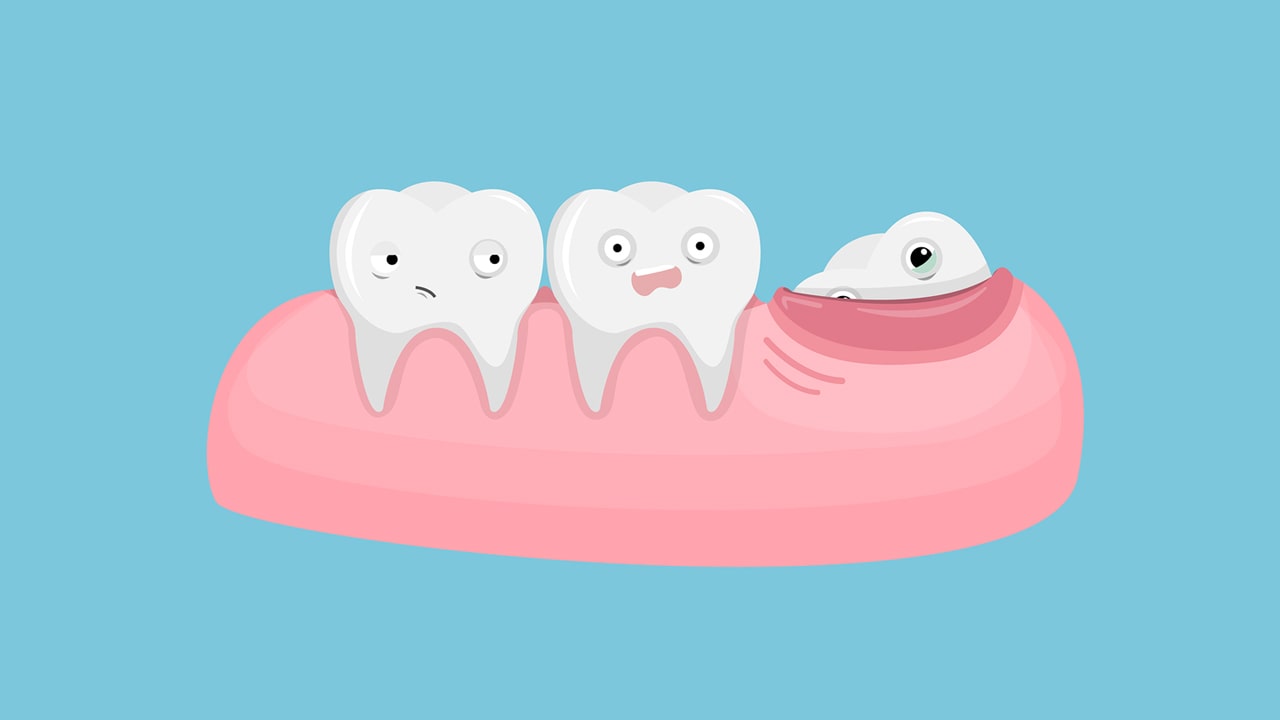
When the gum tissue around a wisdom tooth becomes irritated or infected, swelling and pain usually follow. The main reason wisdom teeth can pose a risk is that an adult’s mouth often does not have enough space for four additional molars. Impacted wisdom teeth can also grow at abnormal angles and push against neighboring teeth, sometimes even before they reach the gum line.
An impacted wisdom tooth that presses on the root of the adjacent molar can cause jaw pain and may lead to harmful changes in tooth alignment. In most of these cases, the impacted tooth needs to be extracted.
Gum disease is another risk associated with impacted wisdom teeth. An impacted wisdom tooth may decay, or it can cause decay in the back surface of the second molar. In some cases, an impacted wisdom tooth can develop a cyst (a fluid‑filled sac) or, more rarely, a tumor, leading to additional symptoms and serious complications such as loss of teeth or bone.
Regular checkups at the dental center in Batal Specialized Complex in Saudi Arabia are recommended to prevent wisdom‑tooth‑related complications and to lower the risk of dental problems.
Read also: What Are Removable Dentures?
Do All Wisdom Teeth Need to Be Removed?
There is limited clinical evidence to support removing impacted wisdom teeth that are disease‑free and not causing any symptoms. However, there may be a slight association between symptom‑free impacted wisdom teeth and gum disease or bone loss around the second molars.
Researchers recommend that if wisdom teeth are left in place, they should be evaluated regularly by a dentist. We recommend Batal Dental Center in Saudi Arabia to help prevent future problems.
Read also: Porcelain Crown Placement Procedure
Wisdom teeth can still cause problems if they are not properly monitored, even when there is no pain. It is important to pay attention to signs indicating that a wisdom tooth is erupting normally—or that it may be causing an issue. If you decide not to remove your wisdom teeth, make sure your dentist confirms that they are not damaging nearby teeth or tissues.
Wisdom‑tooth complications may lead to gum disease, tooth decay, or other oral health issues. For the best chance of smooth, complication‑free recovery from any needed treatment, visit Batal Dental Center in Saudi Arabia, which has extensive experience in this area.
Read also: Toothache in Children | Most Common Causes
The dental clinic at Batal Specialized Complex is equipped with advanced tools and technology to help anyone suffering from dental pain get relief under the care of highly skilled dentists. Book an appointment as soon as possible at the dental clinic in Batal Specialized Complex.
Read also: The Difference Between a Gum Abscess and a Tooth Abscess