

Table of content
ToggleBenefits and Importance of Wisdom Teeth
Before looking for a definite answer about whether wisdom teeth have any real benefits, it’s worth noting that dentists often recommend removing them because they generally don’t serve a clear function. Wisdom teeth are considered remnants from a time when humans ate a much tougher diet rich in hard roots, seeds, and fibrous leaves. Today, with our softer, more processed foods, these teeth usually don’t provide any significant advantage, since the other molars are more than enough to chew the foods we eat.
Read also: Symptoms of Dental Nerve Inflammation in Detail
Understanding Wisdom Teeth
Wisdom teeth are the furthest molars at the back of the mouth, which makes them harder to clean. This increases the risk of tooth decay and gum disease. Dentists usually remove wisdom teeth once they are damaged by cavities.
It is possible to place fillings in wisdom teeth, but dentists rarely recommend this. A wisdom tooth that has already developed decay is more likely to cause problems again in the future. Removing it when the issue first appears often saves the patient from needing repeated treatments on the same tooth later on.
Since wisdom teeth are not essential for chewing, a person does not lose any real function by having them removed. Keeping wisdom teeth, on the other hand, can increase the risk of issues such as gum disease and infections. Erupting wisdom teeth can also create orthodontic problems if they push against neighboring teeth or cause crowding in the jaw.
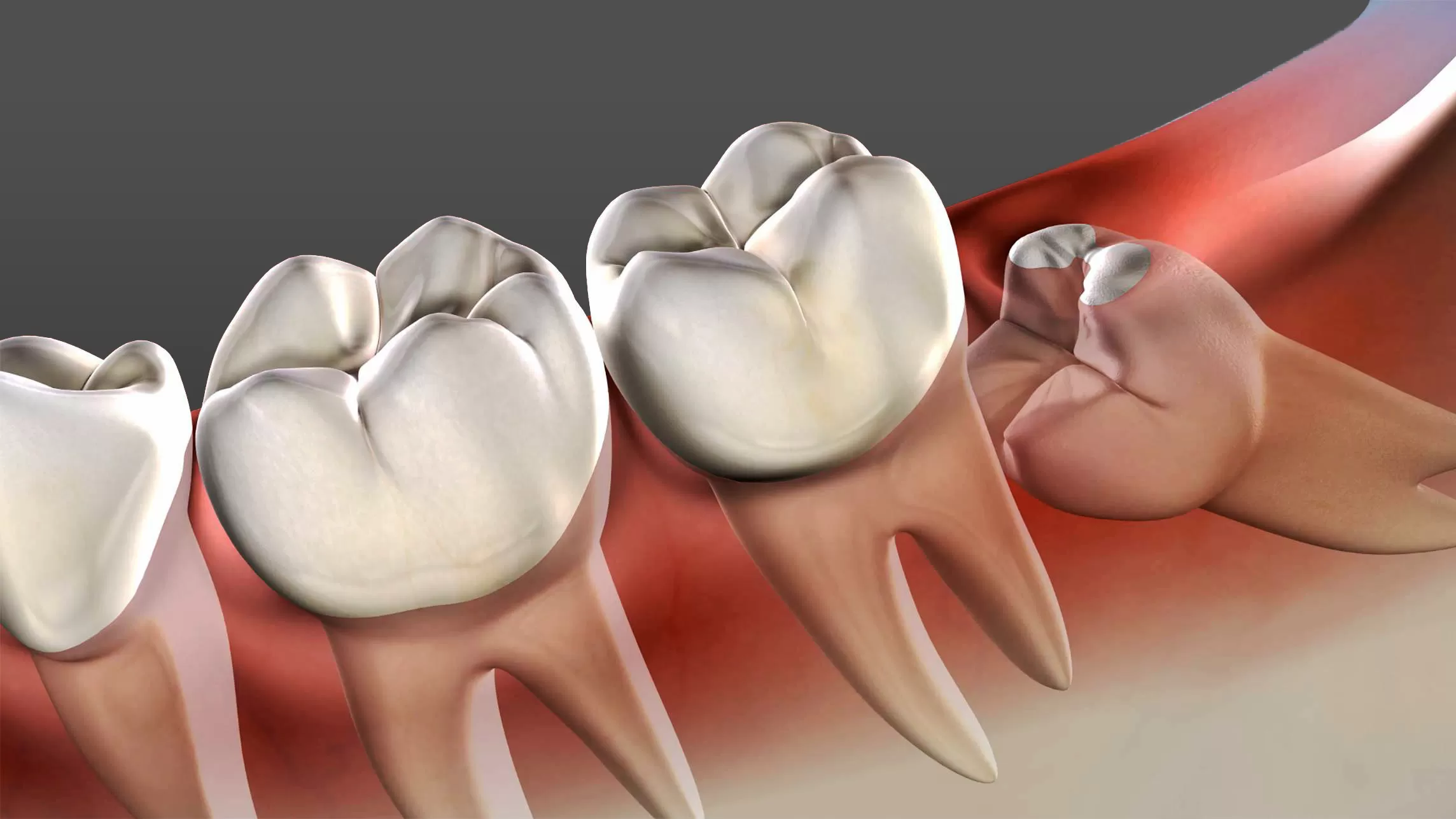
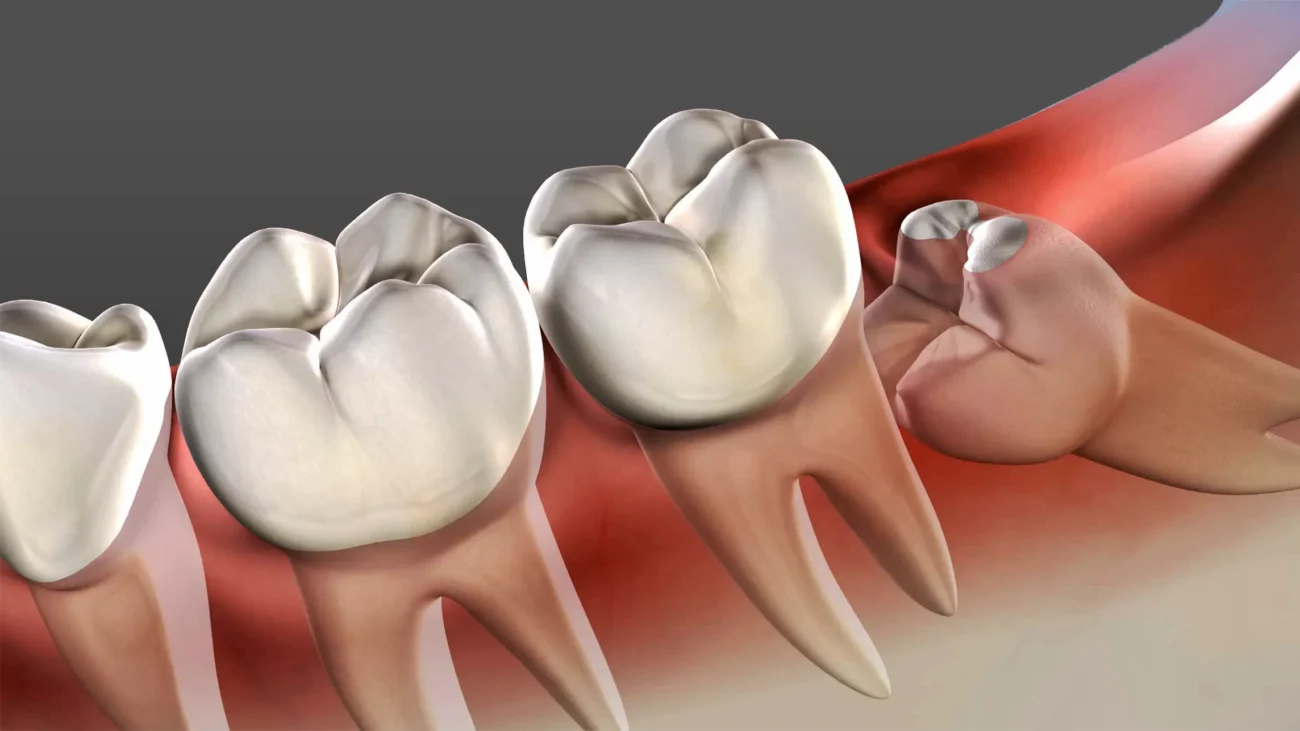
This crowding can negatively affect the alignment and appearance of the teeth. Wisdom teeth typically erupt between the ages of 17 and 21, but there is not always enough space for them to come in fully. This can lead to impaction, where the tooth remains trapped in the jawbone or beneath the gum line. Sometimes, a wisdom tooth only partially erupts, leaving a flap of gum tissue that becomes a breeding ground for bacteria.
Read also: Treatment of Dental Nerve Inflammation
What Happens During Wisdom Tooth Extraction
Removing a wisdom tooth is considered a minor oral surgery. Depending on how much of the tooth is visible, the dentist will choose between a simple extraction and a surgical extraction. A simple extraction is done when enough of the tooth is exposed for the dentist to grasp and remove it using forceps.
A surgical extraction is needed when the dentist must make an incision in the gum to gain proper access to the tooth. In most cases, the procedure begins with the dentist administering a local anesthetic.
The anesthetic numbs the area and prevents the patient from feeling pain during the procedure. The dentist may need to make an incision or cut the tooth into smaller pieces to make removal easier. The recovery period after extraction can last up to two weeks.
Patients should expect some pain and discomfort while healing. This is usually managed with prescription or over‑the‑counter pain medication, as advised by the dentist. It is best to stick to soft or liquid foods during the first few days after the extraction to avoid irritating the surgical site.
Read also: Dental Crowns | Best Types and Main Uses
Main Benefits of Wisdom Teeth
Although dentists often recommend removing wisdom teeth, extraction is not always necessary. In fact, when wisdom teeth do not negatively affect oral or general health, it can be better to keep them.
Properly erupted and well‑aligned wisdom teeth can provide additional support at the back of the mouth and help maintain jawbone volume in that area. This support can be beneficial for the temporomandibular joint (TMJ). Still, many wisdom teeth are removed as a preventive measure to avoid potential complications later on. It is important to discuss the pros and cons with your dentist to determine the best course of action for your specific case.
Read also: Removable Dentures | Key Advantages and Disadvantages
The dental clinic at Batal Specialized Complex is equipped with advanced tools and devices to help anyone suffering from dental pain get relief in the hands of highly skilled dentists. Do not hesitate to book an appointment at the dental clinic of Batal Specialized Complex.
Read also: The Difference Between a Gum Abscess and a Tooth Abscess

Dr. Fares Matouk
- Bachelor’s degree in Dental Medicine and Surgery from Al-Qalamoun University – Damascus.
- Completed multiple courses in cosmetic dentistry and smile design.
- 11 years of experience in restorative and cosmetic dentistry.
Areas of interest and expertise:
- All types of prosthodontic services (bridges, crowns, and bonded dental veneers such as veneers and lumineers).
- Cosmetic dentistry services (esthetic fillings, tooth restoration, Hollywood smile).
- Comprehensive smile makeover planning and execution.
- Root canal treatment and tooth extraction.